Episode Transcript
[00:00:00] Speaker A: Grief, it's not something you can escape. We are in the valley of the shadow of death.
Today I met a new friend who came to my office for a cup of coffee, told me the story about losing his son when his son was just 3 years old. How he made peace with that peace with God again and came out the other side, not only to have hope, but to start a thriving ministry helping others cope with grief. You're going to get so much out of today's episode, wherever you're at in life and so many tools to help people in your life when they're coping with grief. Today on the Chris Stefanik Show.
Welcome to the Chris Stefanik Show. We're here every week to give you the tools and inspiration you need to live your everyday life with joy. Guys, we all need it and I'm proud of you for spending time to get it because you could spend so much time on stuff that frankly just brings you down and is just focusing on the negative things happening in the world today. Sure. Be aware of them. Watch those things for five minutes. Watch the Chris Stefanik show for the entire hour to lift you up, to pump you up, to help you be the you that God is calling you to be. Missionaries of joy, thanks for making this work possible. If you're not one, jump off the sidelines, become one. Link is below this video. With a small monthly gift, you help us change the world. Become part of the daily anchor family. Click below this video. Sign up for the daily anchor and let us inspire you every day, no strings attached. And this episode is sponsored in part by ewtn.
You can catch this and so much more to bolster your faith on EWTN Streaming. Link is below in the show notes. Let's dive in.
Mark, thank you so much, brother. Got it.
[00:01:42] Speaker B: Thank you.
[00:01:43] Speaker A: This is my first completely, totally unplanned interview. Mark just was like, he came by, sat down, like, let's grab some coffee and we start talking. We're 10 minutes into the conversation. Like, why don't we just record this conversation?
[00:01:55] Speaker B: I mean, I didn't have time to get a haircut.
[00:01:58] Speaker A: No, I didn't. I literally rolled out of bed this morning for this coffee because I stayed up late last night and I'd like my hat on here. There's my unwashed hair. And thanks for doing this.
[00:02:08] Speaker B: Thank you. Honestly.
[00:02:09] Speaker A: Yeah.
And you were on our rise program.
[00:02:12] Speaker B: I was.
[00:02:13] Speaker A: And this story we're about to talk about is also in there. It is incredible program for men. We'll link to it below the video.
Mark Tell me about.
It's amazing having conversations like this. And thank you. Because when I ask the question I'm about to ask, it's like me taking a scalpel and saying, yeah, show us your heart in its most painful place.
Tell me about the tragedy that completely transformed your life.
[00:02:39] Speaker B: Wow, that's a question.
How much time do we have?
[00:02:43] Speaker A: I know, right? Yeah. Well,
[00:02:47] Speaker B: my wife Christy and I had the unfortunate experience of losing our son suddenly to bacterial meningitis. And this was 25 years ago and our son Bobby was 3 years old and at the time of his death, he was the middle of three children and our only son at the time.
And you know, I know that we're just jumping right into it, Chris, but you're never prepared for. Oh, I wasn't prepared for any type of experience like that.
[00:03:20] Speaker A: No way to be.
[00:03:21] Speaker B: And it truly rocked our world, our marriage, our parenthood. It just every role or, you know, that I was living out as a young father, as a spouse, as an employee, you know, was wrecked and shattered really within a 24 hour period.
So
[00:03:47] Speaker A: there's nothing like a three year old little boy.
That is the, that's the most beautiful, it's the cutest thing, the potential to be like the little man in there, you know?
[00:03:58] Speaker B: Absolutely.
[00:04:00] Speaker A: Do you. How often are you replaying the events of that day in your head?
[00:04:05] Speaker B: Well, you know, it's times like this where like it's fresh. I mean, you know, people are always, sometimes they're saying, wow, we're looking for that invention of a time machine. Like right now, my brain is that time machine as we're talking about it.
I can go right there to that hospital room, to the doctors, the nurses and family gather around us.
It's a fine line, you know, grief journey. That's why we call it a journey.
It's lifelong. And as we're talking about it right now, I can envision that day.
[00:04:40] Speaker A: I could see you, feel it when you, the deep breath you took just then.
Grief isn't something.
And we'll dive into the whole ministry you started.
[00:04:50] Speaker B: Sure.
[00:04:50] Speaker A: Because you're dealing with this, with people walking people through grief all the time.
It's not just something that leads you to mourn the loss of one thing.
The way you just described it, it shattered every identity in your life.
[00:05:03] Speaker B: Absolutely.
[00:05:03] Speaker A: If it's a big enough grief, it can feel like the loss of everything.
How does that work? I mean, how did these, you know, how did this shatter everything?
And what did the aftermath of that look like in your professional life, your marriage Your identity as a dad and you have other kids at the time too.
[00:05:24] Speaker B: Yeah, absolutely.
[00:05:28] Speaker A: How dark did it get?
[00:05:31] Speaker B: So I would say, I mean, our kind of. Our hinge moment was like, before Bobby and after Bobby and, you know, so to talk about our life before Bobby, like, from a, From a. I'll call it like a religious or Catholic point of view, like, yeah, we were married in the church and we were going through the motions. I mean, it was, you know, married in the church, check.
Kids baptized, check, check. You know, and it was more, you know, kind. If I could say it this way, we were more. Not that we were known or anything, but we were kind of like glamour Catholics in a sense of like, you get dressed up on Sunday and, you know, we had two daughters and my wife would like, you know, pigtails and dresses and like, get them all dressed to the nines and cute just to go to mass on Sunday. And that was like. Our faith was really shallow. You know, we're both born and raised Catholic, Italian, Catholic families, kind of stereotypical, you know, with food and love and passion. I mean, that's, that's, that's. That was us. And. And yet our faith was, Was very shallow and from a, like, from a professional point of view.
We met at Ohio State. I was an engineering degree. I was in technical sales. And my priorities were, were mainly like, material things. It was like, oh, I got, you know, I had that sense of providership. Like, oh, I wanted to. And my wife wanted to be a stay at home mom and like, oh, I got to provide. So I got to be successful financially and provide for the family. That was probably my number one goal before our son's death was material things. House, cars and just providing materially.
And then, you know, I would even say, my wife Christy would say too, probably our kids were second. Like, it was like, for me, it was like work and then taking care of the kids. We were good parents.
I don't know how good of spouses we were to one another.
And then God was again, we were checking the God box and he was definitely at the bottom. So in many ways we were upside down.
And when our son died, and you have to understand, like, I won't go into all the details, but we brought him into the hospital on Mother's Day night, May 15th or May 14th of 2000.
And we thought, I mean, he had a fever and he wasn't feeling good, and we felt like he was. He wasn't able to hold things down. And, and, you know, those that have young kids know when that when that fever creeps up and, and they're not holding things down, dehydration sets in. And we, we really thought we were bringing them to the hospital to give him some fluids, perk them up and kind of bring him home like within hours, you know, I mean that's, that's the mindset we went in with.
[00:08:10] Speaker A: Yeah.
[00:08:11] Speaker B: And over a 22 hour period, we got to the hospital like I would say nine o' clock at night, Sunday evening you're in an emergency room, you know, don't go to the emergency room on the weekend. Not a lot of help there. You know, this just seems like there's, you know, and we walked into this, you know, looking back on it, to this real situation that we never thought we'd find ourselves in. And the ultimate result was we left the hospital 22 hours later empty handed.
And remember, my wife was the last one to hold our son, Bobby. And I just knew, you know, he was.
When the meningitis sets in, you know, the brain swells, organs shut down and there's no, there was no life there, you know, and she was the last one to hold our son.
And you know, we walked back into our home and we just fell flat, like prostrate out of exhaustion, out of just pure shock and like shattered.
And in many ways, as I retell that story, you know, I'll say, you know, God brought us to our knees and in many ways we've stayed there ever since and didn't happen overnight, you know, mainly stayed on our knees out of pure exhaustion and no strength to get up and no zest for life.
And you know, when I talked about my life before our son died, that, that drive of providership and material things, I mean, that was, that did that. Like I knew right away, like this, this doesn't matter anymore at all.
So that was, that was a pretty like if anything happened immediately it was the priority of how we were living our life.
In many ways it needed to be shattered. Yeah.
And the hard lesson in all of this is, you know, suffering can be a great teacher.
And I don't think God would have got our attention any other way unless we would have experienced such a tremendous suffering of losing an innocent little boy.
And I can keep going, but I'll have you kind of direct the next question.
[00:10:40] Speaker A: I get the image of a sledgehammer, right, Hitting your life and everything that was on the shallow side just shattered.
[00:10:49] Speaker B: Yeah.
[00:10:50] Speaker A: But then you find yourself in this phase where, I mean, despair sets in when you don't know what your. Why Is right.
So it shattered those things. And yet the things that can take you through scripture talks about being anchored in hope. Actually, an anchor is as ancient a Christian symbol as the cross is.
When an anchor is in the bottom of the sea, the storm hits and the boat's going to stay. You're fine. You know, so all the shallow stuff got shattered, but yet your life isn't in a place where you're anchored in the big stuff yet. So there's that in between phase.
And that in between phase is where a lot of people lose it all. I mean, how many people become addicts?
They start hitting the bottle too hard?
This for you, though, was a time of grace where you got closer to your wife.
[00:11:47] Speaker B: Oh, yeah.
[00:11:47] Speaker A: You came deeper into your faith instead of resenting God, which I look at from the outside and say, that's just. That's only explainable by grace because of what you just described.
[00:11:57] Speaker B: And listen, our response, I mean, I had poor habits, you know, self satisfaction, like seeking immediate pleasures that were really a dark spot for me, you know, absolutely 100%. And, you know, my wife, we. We were kind of in an escape mode. Like, we. Not that we. Like, it was.
We. We traveled, we shopped. Like, we were still kind of reaching out, like, for, like, immediate satisfaction on certain things. But there. There was. There was this sense of even, I'll even say this, we. We felt called to start a grief support ministry.
Like, pretty immediate, really, pretty immediately, yeah.
But yet we hadn't quite had that real reversion moment to put faith as a foundation. So I'm gonna say, because we were a family so devastated, like, the immediate response was like, we need support. So there were some practical things. Like we were trying to find counseling, we were trying to find support groups, not only for ourselves, of other young parents that lost young children, but even for our kids in some, you know, whether it be therapy or just some. Some type of help, like, we were desperate for help, and there was a lot of. It was expensive, it was difficult to find, it was unorganized.
And so there was this sense of immediately, like, we did feel, well, we're going to do something about this. Like, we feel called to start a grief support ministry.
[00:13:23] Speaker A: Wow.
[00:13:25] Speaker B: But in God's providence, we.
When we started kind of thinking about that and even kind of framing out even a name or kind of just really, we were the case study of one. It's like, man, grief support should be available, you know, not expensive, and it should be able to serve all ages, you know, and so there was that Sense. But from a faith point of view, we still weren't there yet. And I would say probably had the idea of starting Cornerstone of Hope, which is our grief support ministry, within the first.
Somewhere around the 10 month mark after our son died.
[00:14:01] Speaker A: Wow, that's quick. Yeah, I want to jump deeper into that.
[00:14:05] Speaker B: Yeah.
[00:14:05] Speaker A: But first, like, what got you to the place where you're finding a more solid relationship with God, more solid relationship with your spouse than you ever had before? The worst thing that a parent can imagine.
[00:14:16] Speaker B: Yeah.
[00:14:17] Speaker A: So by worst thing I mean like I'd rather get like honestly, pretty much anything else happen than that. Right? Absolutely.
And yet it brought about the greatest blessing, which is a miracle. So what, yeah. What led you there?
[00:14:28] Speaker B: So my mother in law, you know, devout Catholic, praying for us. I mean, and she, she knew, I mean mother's intuition, like she knew what we needed and she even was mentioning like she can kind of see us talking about like a ministry, but she knew we needed to get right with God first.
And she had a. We live, raised our family up and around Cleveland, Ohio. And we were, I grew up in Steubenville and so the old Steubenville is a, the old seminary grounds is an apostolate called the Apostolate for Family Consecration.
You know, Catholic family land.
[00:14:59] Speaker A: I used to cut grass there during my summers as a student at Steubenville.
[00:15:04] Speaker B: Hopefully you're on a riding mower because they're getting like hundreds of acres.
[00:15:09] Speaker A: It's a gorgeous place.
[00:15:10] Speaker B: But my mother in law had this pamphlet. She was like, just tell me you'll go.
Just tell me you'll go.
And she didn't say what it was or anything. And it was this pamphlet for Catholic family land because she knew again, mother's intuition. She knew we needed to get right with God. And all the practical support of meals and cards and people checking in on us was really like powerful, but we still feel like we were sinking. And so we went to a Totus Tuis retreat weekend in October of 2001
[00:15:42] Speaker A: at the Apostolic Family consecration.
[00:15:44] Speaker B: Yeah. And that's where we'll link to that
[00:15:46] Speaker A: below the video too.
[00:15:48] Speaker B: That that was where from a faith point of view, that's where everything changed. When you talk about like everything being shattered and like starting to rebuild, My, my, my, our foundation as parents, as a married couple really started that weekend. We, like I said, we were both kind of coping in our own ways, sometimes on the same wave, most of the times not. But we both had a really transformational confession with Father Kevin Barrett, you know, Know, one of those kind of tell all not rushed. Like a good. I don't. It felt like I was in there for two hours, you know, it probably wasn't. And my wife had it, and she was right in line after me.
And when she got out of the confession, like, there was this.
[00:16:29] Speaker A: Okay, wow, wow.
[00:16:32] Speaker B: Like, this was kind of our road to Emmaus moment, like Father Kevin was. So, you know. Yeah, it was our road to Emmaus. It was like he was kind of unveiling the scriptures to us and the power that suffering could have in our journey. That's really what I think he was saying. Like, okay, like, this is, like, this is the Christian walk.
You don't run away from this. You encounter this.
You embrace it. And God's going to use it. I promise you, if you give it to him, he's going to use it. Now, those weren't his exact words, but, I mean, that's. That's the sense that we both had and that. And that told us to us weekend. And, you know, I would say from that point forward, not that we were running away from God, but let's just use that image. You know, we're definitely, you know, kind of straying away from him. That was kind of like where we now were redirected to him into, like, our ultimate destiny of like, all right, our destiny is heaven. It's not. I'm not going to find happiness in material things and satisfaction with work and a bigger house or whatever. The material things that we're pursuing that I was pursuing, like, our destiny is heaven to be reunited with our Son.
And from that weekend till the point that I'm talking to you today, man, I got chills.
We're a work in progress. Never perfect. Didn't happen overnight. This. This journey back to living out an authentic Catholic life is just that. It's just like a grief journey. Our faith journey is very similar.
[00:18:08] Speaker A: The word metanoia comes to mind. Right.
[00:18:10] Speaker B: Change.
[00:18:11] Speaker A: Yeah, yeah. Jesus, when he called people to repentance. I think repentance. Repent. His first words when he started his ministry. I think repent's a bad translation of the word because it implies very heavily, stop sinning, which we should all obviously stop sinning. Right. But the word was metanoia, which literally means metanoia. Totally. Change your mind, change your thinking.
[00:18:32] Speaker B: Absolutely.
[00:18:32] Speaker A: About everything. It's like a shift in mindset, which is where most of our sins are coming from is the wrong mindset. Right. So take on the mind of Christ, and that's what you experienced by the Sledgehammer pain driving you to it?
[00:18:46] Speaker B: Absolutely.
[00:18:47] Speaker A: What I want to know, too, is, like, what set you apart? What.
Maybe just grace is the answer. Right. But there's things that would prevent someone from even getting to the place of saying, okay, let's look at the change mindset. Let's. Let's sit in a confessional. Let's go on a retreat. Let's.
The things that would make someone say, I don't want to change my mind because I'm pissed, I'm angry. Like, this shouldn't have happened.
[00:19:11] Speaker B: Right.
[00:19:12] Speaker A: I think of when Lazarus died and his sister went to Jesus. Like, lord, if you were here.
[00:19:17] Speaker B: Yeah.
[00:19:17] Speaker A: Like, if you were here, this wouldn't have happened. And Jesus wept with them. He was there in his own way, Right?
[00:19:23] Speaker B: Absolutely.
[00:19:26] Speaker A: Did you struggle with those things leading you to that confession moment with the anger?
How did this go different for you than for so many other people? And you've seen people on this road, you walk with them all the time. Oh, yeah, right. The ones that rise up and say, I end up with a better marriage, with a deeper faith versus just being tempted. I was brought to the edge of the cliff. I'll jump into the darkness now and just give in.
[00:19:50] Speaker B: Right.
[00:19:52] Speaker A: Where do those roads diverge? Because I want to follow you on your road, brother.
[00:19:56] Speaker B: Yeah. No, I would say it was mainly my relation. Mine and my wife Christy would say the same thing. Our relationship with God in that trinity,
[00:20:08] Speaker A: you didn't give it up. You weren't tempted to throw it away in anger?
[00:20:11] Speaker B: I wasn't, but it was like.
It's kind of a backhand compliment. Like, I knew my wife couldn't satisfy these questions or any family or friends or any counselor for that matter. Like, I was directing it to God. My anger and my frustration was directed to the Almighty.
[00:20:26] Speaker A: What did that look like? Were you crying out to him in anger? Like, you know, screaming at you in prayer?
[00:20:32] Speaker B: I mean, this would be like midnight at the cemetery, crying and, like, physically at my son's grave, on my knees, screaming out, why?
Why me? Why him?
And the image, like, two images happened that night. And again, this is about roughly somewhere with 10 to 12 months after our son had died and I had an encounter with the father that evening or that late night in the cemetery where his initial kind of posture, if I could say it was more of, like, a disciplinarian father, because I was so hysterical and, like, just wailing, why? Why me? This isn't fair.
Like, you know, bleep, bleep, bleep. You know, a Lot of cussing. Oh, yeah. I mean, a lot. A lot of prayers. The prayers of agony. Yeah.
[00:21:28] Speaker A: Yeah.
[00:21:28] Speaker B: Oh, yeah. And so they have this. This image of, like, a disciplinary. Like, if you're like, you got to get a hold of one of your kids and they're not listening, like, you're going to. Sometimes you got to put your hands on their shoulders and get them up against the wall and say, hey, like, listen to me.
Listen to me.
And I finally kind of. All right.
Got my attention now. I'm listening. I'm like, you know, I'm. I'm crying, but I'm kind of, like, whimpering now. And, like, my breathing is slowing down. And it was this sense of.
He was looking at me eye to eye.
[00:22:00] Speaker A: Wow.
[00:22:01] Speaker B: And said, my son died, too.
And that was so.
It sounds so simple. I mean, you know, took it so for granted walking into Catholic church and, you know, the crucifix. You know, it's just. I just took it for granted
[00:22:22] Speaker A: that
[00:22:23] Speaker B: I didn't have that image of a grieving father is losing his son on that cross that day.
And just that repetitive kind of. Again, didn't hear voices, but heard voices right here. God's saying to me, my son died, too.
And just kept repeating that. And then his posture had changed. Instead of, like, get me up against a wall, now he's right next to me with his arm around me.
And I could envision my, like, my head just kind of resting on God's shoulder.
[00:22:57] Speaker A: Right, right.
[00:22:58] Speaker B: Even on his heart.
And.
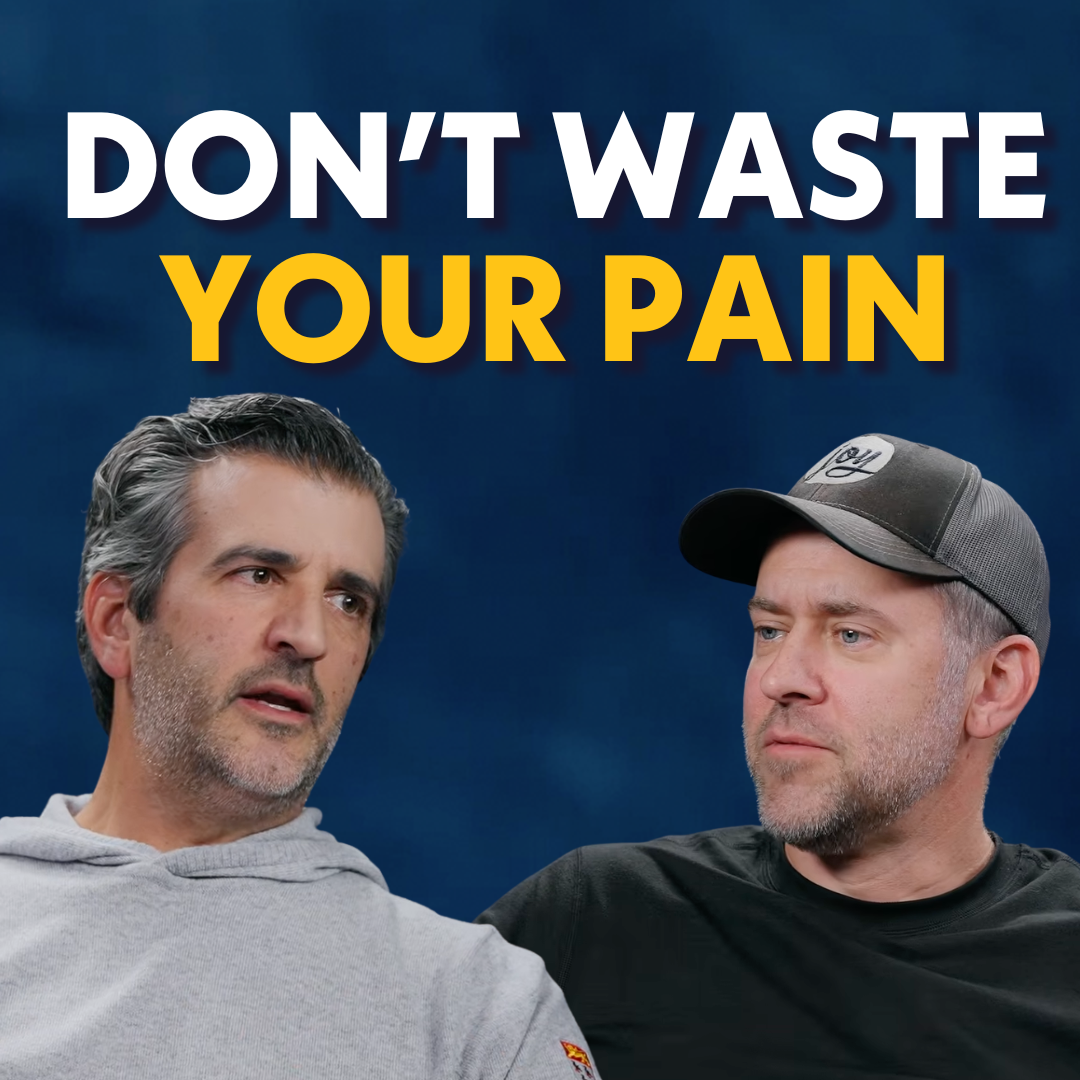
And then he repeated over and over again, do not waste this pain.
Do not waste this pain.
And the, the tears then started flowing again. I mean, I was like, more out of anger and everything. And then I kind of was heavily breathing and then just hearing, do not waste this pain.
I, I, I, I had this. It was really, for the first time of. I'm like, all right, he's. He's not against me in this suffering. He's with me.
[00:23:31] Speaker A: Oh.
[00:23:33] Speaker B: And.
And that. That. That was the moment that when you say what that was the set apart.
That was a set apart. My. And so my wife. I know we. We got to do round two with her sometime.
[00:23:47] Speaker A: I will.
[00:23:47] Speaker B: Because I think, speaking from a mother's heart point of view, she can speak to things that I can't, but she was. God was working on her simultaneously.
And she kept hearing, we need a place.
We need a place, dude.
[00:24:05] Speaker A: It's so powerful.
So many things are coming to mind right now that are applicable, whether you're dealing with profound tragedy or just the Everyday disappointments that life's not measuring up to ideals.
It's that prayer of agony, the prayer that comes from the agony of the heart. So many people go the wrong direction because we think God's incapable of hearing those, and so we stuff them. Actually, we're afraid to say those prayers of agony ourselves. We're incapable of hearing them is the reality. Right. But the prayer of the Father kneeling at his son's grave and shouting, why to the Father instead of running away, you know, where else are we going to go, Lord? St Peter said to Jesus, like, yeah, when nothing makes sense, okay, but where else do I go? You know, Fr. Benedict Groeschel wrote a beautiful Station to the Cross, and one of the meditations in it was about Jesus said, my God, why have you forsaken me?
And he said. He said that so that when we want to say it, we're not saying it alone.
So that even in that place, he's there, you know, when you want to say, where the heck are you? You want to shout it out, he's on the cross next to you.
[00:25:14] Speaker B: Yeah.
[00:25:16] Speaker A: And when you go there with him in that, he doesn't just get you through, he actually turns the pain into a blessing. And that's your path. That's the miracle of what's happened.
[00:25:27] Speaker B: Absolutely.
[00:25:28] Speaker A: I've been doing this for 25 years. Yeah. So tell me about the ministry that came from the worst thing that could happen.
Yeah. How has God turned that into a blessing and help for others to over 60,000 people who suffered through grief.
[00:25:42] Speaker B: So that was so, you know, so again, God's working on us.
We hear, my wife hears, we need a place. I'm here. Do not waste this pain.
We go to the Totos Tuis weekend in October of 2001.
Then our direction, our priorities are really changed. They really are. And it's like, all right, this. This idea of this ministry, we feel equipped now because we had it. We had the cornerstone. We had this solid foundation to kind of start putting our life back together.
And still took some time, but I would say our son died in May of 2000. At the end of 2002, we started kind of sharing it with some close family and friends and members in the community in the Cleveland, Ohio area. That kind of what I'm telling you.
This has been our experience.
This has been our barriers for support in the community. This has been our faith journey. And we want to provide a place where pain isn't wasted.
God's voice working on my wife, working on me, and that turned into Cornerstone of Hope.
And it comes.
[00:26:50] Speaker A: I'll link to that below the video. Cornerstone of hope. What's the URL cornerstoneofhope.org okay.
[00:26:56] Speaker B: Yep. And Ephesians 2, Christ is the cornerstone versus 20, 20, you know, somewhere 20 through 23, where two, you know, and the apostles and prophets gather in his name, and the whole dwelling becomes the Spirit of the Lord. So that's. And, you know, so that's. That's the essence. That's the life verse of Cornerstone of Hope. And so the idea was not only to build a place where pain isn't wasted, but, you know, if we were to ever to go through this again, what would have we needed from, like, from a practical point of view?
[00:27:27] Speaker A: How awesome. Instead of complaining about that, let's go ahead and be the ones that we see the problem. That doesn't mean it's my cue to complain. That means it's God giving me discernment to step in and fix the problem. Man. Way to go with that. That's the right spirit, brother.
[00:27:40] Speaker B: And that's why we had to get right with God first and say the idea of cornerstone came first. But, you know, yeah, it didn't go forward because we still didn't have that foundation and that kind of real reversion moment. But now that we've had that, it's been like from the. We officially started in 2003, so roughly about three years after our son died, which some would say still very soon after.
[00:28:03] Speaker A: Yeah, yeah.
[00:28:04] Speaker B: But from that point to where we are today, you know, 22 years. Next year will be 23 years of ministry, serving grieving. Not just parents that have lost children, but all ages, kids, teens and adults, support groups, counseling, youth camps for grieving kids that have lost a sibling or parent, retreats, spiritual direction, and actually a lot of education and training for local churches as well. There's some bigger churches that have grief support ministries. We want to train them, help them do it the right way.
But a lot of the local churches in our area that might have a grief support ministry, they still refer to us because if it's traumatic situation or where there are young kids involved, they look at our mission and ministry as an expert to really walk alongside them and help them. And so, you know, that didn't happen overnight as well. I mean, it was when, you know, when we first started, we were, you know, the phone was ringing in our house, you know, and we were. And we had a little donated office space in the community and, and, you know, one and a half staff and fundraising and things trying to trying to get this off the ground. And eventually, I mean, the community responded very positively because there was just a need.
And so, you know, I would say Again, over our 22 year history, 60,000 individuals who have walked through our doors looking for support.
And as we've grown over the years, we've gotten the respect from the community and we handle a lot of that kind of unexpected sudden traumatic death.
And we're faith based.
And some will say, well, how do you go into public schools and everything? And you know, like, how does that happen? It's like we're sought after because of our faith.
[00:29:55] Speaker A: I would say that how the heck do you do this without faith?
[00:29:58] Speaker B: Yeah, absolutely.
[00:29:59] Speaker A: I mean, there's just. We could pretend there might be some other purely secular way.
[00:30:04] Speaker B: Yeah, right.
[00:30:04] Speaker A: And I'm sure there's little band aids that could put on things. But ultimately, dude, there's. Unless you're answering the metaphysical problems of life and death, absolutely. I mean, all the solutions are just medication to.
[00:30:16] Speaker B: And listen again, I told you, I think prior to us coming in here for this interview, like, we serve more people that are angry with God than are like, yeah, happy with him and the relationship is strong. And so, you know, we're not dogmatic in a sense. We have to meet them where they're at. I mean, just, just, I mean, that's road to me.
[00:30:32] Speaker A: It's just walking with them in the wrong direction sometimes. Jesus did.
[00:30:35] Speaker B: Jesus Christ would have welcomed and serve all. So do we. Believers, non believers, believers of other faiths, people.
And so we, we want to represent Christ to them and those that want to take that deeper walk with us. And from a faith point of view, you know, we're equipped to do that.
[00:30:53] Speaker A: Beautiful.
[00:30:54] Speaker B: And you know, it's not forceful, it's just, it's just being present, but you're
[00:30:59] Speaker A: present in a way that's extreme. Like my friends Vic and Anthony got you here today, this morning, like they were at your table. Like there's people who at all times you're hanging out with them and you're reliving this even when you talk about it. Now I could see, like, you know, how do you not fall back into darkness when you're reliving it? I mean, the pain seems overwhelming. Compassion. Pope Benedict XVI wrote about this in Space Salvi. You know, it's compassion, like it's to suffer with, but you really need the incredible grit of faith to have the capacity to bear all the pain. Right.
But does that start to get you down because you're a generally happy Person, like, sitting in front of me right now and like, you're living in this space all the time.
How do you keep sane?
[00:31:50] Speaker B: Yeah, I mean, that's the beauty of the church and really the sacraments. And I'm not being cliche here. I mean, the sacraments have sustained us. And I mentioned, you know, going to confession with Father Kevin, like, a year and a half after our son died. You know, he really taught us. And maybe somebody tried to teach us before, but we never heard it, but he was like, regular confession, like, at least monthly.
At least monthly. And if you're falling into, like, habitual sin and other things that are dark, you need to get right with God. He challenged us. Regular confession and worthy reception of communion.
And I would say that's what sustains us.
[00:32:33] Speaker A: That's the fuel.
[00:32:34] Speaker B: That's the fuel. And there have been times where I haven't been worthy to receive communion, you know, And I'm like. And I'm battling even to get on that communion. Like, well, should I go? But, man, if I don't go, my wife's going to think, like. And my kids, like, why aren't you going to Communion, Dad? But it's. I got to put my relationship with God and my honoring with him more ahead of my wife and my kids. And so, wow, as embarrassing as it is not to go to communion sometimes on a Sunday, because I'm not. I'm not right with God.
You know, we both have done that, my wife and I and our kids, you know, and that's. You know, there's. There's a cornerstone of hope journey, then there's. The other side, is we're definitely open to life, you know, not, you know, in the beginning. Like I said, our faith wasn't important early on in our marriage. Like, we didn't. I mean, we were always open to life, but not this, like, intentional openness to life. But we've had six more children since our son's death.
[00:33:30] Speaker A: And what's your total count now?
[00:33:33] Speaker B: Nine.
[00:33:34] Speaker A: Nine. Praise God. Nine and one. And one of them in heaven pulling y' all on.
[00:33:37] Speaker B: Six boys and three girls and my wife.
[00:33:40] Speaker A: We did.
[00:33:41] Speaker B: She did. So she had 11 pregnancies. The last two didn't end well, but that's. Yeah, that's her story.
[00:33:49] Speaker A: She's three in heaven pulling you all on.
[00:33:50] Speaker B: Yeah. And.
[00:33:54] Speaker A: Yeah.
[00:33:54] Speaker B: I mean, so getting back to it, it was.
[00:33:56] Speaker A: It's.
[00:33:56] Speaker B: It's that really the sacraments, the fuel to sustain us. And I think.
[00:34:00] Speaker A: Yeah.
[00:34:01] Speaker B: And I'll say this, even 25 years later, there are certain moments I feel, you know, like we're talking about our son Bobby. Like, definitely feel very close to him now.
[00:34:14] Speaker A: You feel him here?
[00:34:14] Speaker B: Yeah. Certain. Certain, you know, certain songs or memories or pictures, you know, bring you to those. To bring me back to those moments. But communion has been probably the most profound.
And I'd be interested. I'm sure you've had others that have had this experience that it could be a. You know, pick a Sunday, a 28th Sunday, an ordinary time, and I'll receive communion, and I'll just feel his presence in a way that is very real.
And it doesn't happen all the time. You know, it used to happen a lot around, like, holidays, birthdays of our son, you know, but anymore, sometimes it's just. It's a random, ordinary Sunday.
[00:34:59] Speaker A: Wow.
[00:35:00] Speaker B: Where I just. I. I could feel my son saying, like, keep going, dad.
Keep going. Like, keep stepping.
You're w. You know, you're like, you know, I'm one sec, one second closer to my son every second.
[00:35:19] Speaker A: Oh, man.
I have heard. I've heard multiple times from people that at the mass is when they feel closest to their loved ones who have died. It's the. The veil is thinnest there. They're right on the other side of the altar doing the same thing as us. We're drawn. We're not starting worship at mass. We're joining the. The worship that's always happening that they're in right now.
What. When you picture your son and he's encouraging you, how do you see him? What's he look like now? How old is he?
Is he a brother? More than a little boy to you?
[00:35:52] Speaker B: So he's my saint. I mean, he's my intercessor.
I talk to him mainly.
I asked for Bobby's help for the vocation of our other kids.
That's been my primary prayer for him. Like, Bobby especially, you know, we have three adult daughters, and I'm like. Two of them are married now. And I'm like, man, pick out a good spouse for your sisters. You know, just, you know, my prayer for our kids, for those that are discerning marriage, that they, you know, that those. Their spouses, their future spouses may know love and serve God first and above all things.
And I believe he's helped kind of hand pick.
[00:36:36] Speaker A: That's awesome.
[00:36:37] Speaker B: And for our sons, yeah, mainly none of them are married yet. Still discerning. I mean, we have kids, you know, from 31 down to 14, so we're still raising kids.
[00:36:47] Speaker A: But you picture him as a Saint. As a man?
[00:36:49] Speaker B: Yeah.
[00:36:49] Speaker A: What's he look like? Well, or do you picture him as a little boy?
[00:36:52] Speaker B: No, I picture him as a little boy. Yeah, a little boy.
And you know, he was buried in his Superman pajamas.
And that's a, that's a stereotypical image of a young little boy. And there's, you know, with the cape on. So I, I, that's how I see him. I, I see him and sitting in his Superman pajamas as a, as a little boy. And I have a tattoo on my arm, you know, the Superman cape with, with my son's name on it. And you know, that was my thing, you know, and, but regardless of that, that's how, you know, that's how I see him.
[00:37:33] Speaker A: It's beautiful.
[00:37:34] Speaker B: Man, Little boy.
[00:37:35] Speaker A: I love being a man. I love being a Catholic, I really do. I love the mass. I also just love the belief in the communion of saints. And when a little boy dies, you can presume safely that he's there, he's in the communion of saints. Now, Jesus said when he was arguing about whether people are alive after, after death, he said, you know, the Old Testament tells us that I'm the God of Abraham, Isaac, Moses, he, he is the God of the living, not of the dead. Like if someone was alive in Christ here, they don't pause being alive.
[00:38:04] Speaker B: Absolutely.
[00:38:05] Speaker A: Until the resurrection of the last day. They are very much interceding for us, very much alive.
So Bobby and your Superman cape intercede for us.
What would you say if you can give us a 35,000 foot overview of the grief process? Because people who are in it, they're thinking things like, no one knows what I'm feeling.
I'm totally alone.
But when you're familiar with this, you see patterns.
You've worked with 60,000 people, you see patterns and it's like you're not alone. There's actually a well worn path that you can walk here.
And so we don't have three hours to go over that path, but give us an overview to give people hope for.
Not if, but when.
[00:38:52] Speaker B: Yes.
[00:38:53] Speaker A: You know, when we all. Because you have to grieve.
[00:38:55] Speaker B: Yeah. You know, we're, you know, I'm in town for a little, we're running a retreat weekend here.
[00:39:01] Speaker A: Yeah.
[00:39:01] Speaker B: And you know, told my story to those that our guests that came to the retreat last night and what's been, where God's been working on me lately is this phrase. And when you talk about that 30,000 foot view.
[00:39:15] Speaker A: Yeah.
[00:39:16] Speaker B: Is the phrase that God is not safe, God is, trust me.
Say that Again, God is not safe.
God is. Trust me.
[00:39:29] Speaker A: Tell me more what you mean by that.
[00:39:30] Speaker B: So if you just do a normal, like, concord. Like, look at the concordance in the back of the scriptures.
The word safe is only in there one time.
And I don't remember the verse. I should, but it has something to do with material possessions. And it's actually like, well, this is not safe.
But the word trust is mentioned at least 34 times.
[00:39:54] Speaker A: In other words, bad things will happen. But I got you. Yeah, I got you. The ultimate plan is good.
[00:40:01] Speaker B: Listen, you know the stories better than I do. You look at Old Testament stories of trust in God, Nebuchadnezzar burning the three brothers, Shadmac, Reshach, Meshach, and Abednego. Right. I mean, they totally trusted God. Well, it wasn't a safe environment. I mean, they were thrown into the fire.
They survived.
And that. That turned Nebuchadnezzar around and said, oh, my gosh, like the God that I was worshiping, I need to worship your God.
But the outcome isn't always good. That's the hard part. Like, you look at St. John the Baptist. I mean, his whole mission and ministry was to prepare the way he trusted.
He knew Christ was the Messiah, but his outcome on this planet, you might
[00:40:47] Speaker A: say rough was rough, but for eternity, when the end of the story is good, the whole thing is good.
[00:40:55] Speaker B: So those are two extremes, but it's like, you even look at. Like, look at Pope John Paul II when we talk about a griever. I mean, he was an orphan in his early 20s.
Sister died before he even met her. Mom died. He was young. His brother died, I think late teens, early 20s. I don't have the. You know. And then his dad died in the early 20s.
[00:41:15] Speaker A: Yeah.
[00:41:15] Speaker B: Communist Poland, underground church, seeing friends and priests murdered because of their faith. And yet, you know, he's one of the greatest popes of our modern times when it comes to grief. And look what all he did.
[00:41:33] Speaker A: In my trusting God, he wrote before my 21st birthday, I already lost everyone I ever loved, including my older sister, who I might have loved but didn't meet because she died before I was born. I'm like, that. Reading those words is like, whoa, this is. Yeah, we're not spared pain.
[00:41:48] Speaker B: That's right.
Yeah.
[00:41:50] Speaker A: So what's. What's that roadmap look like through pain? You know, if you can. If you have steps in mind.
[00:41:56] Speaker B: Yeah.
[00:41:57] Speaker A: Again, we. Without going into detail, just to give hope that there's. There is a path.
[00:42:02] Speaker B: Yeah, I think it's Just that orientation of, again, it's in scripture, being in the world, but not of the world.
What are our priorities as a single parent now, raising young kids, as a married couple? There's lots of children. Whatever the grief situation may be like, we've got.
It's hard. It's not overnight, I promise you. It's a journey.
But if you put God as a priority and have this sense that again, we worship a grieving father, he's not against you in your pain. He's with you.
I said that earlier. But it's just that mindset and that shift of, all right, it's that common prayer, the footsteps, right where Christ. Where were you? And there's only one set of footsteps in the sand, and that's when he was carrying us. I mean, that's that for me, I would have never gotten that unless I've had the experience of suffering.
But uniting, you know, St. Paul talks about we have to unite our sufferings with Christ. What's lacking? You know, it sounds like. What. What's lacking? Like, he didn't give it. Christ didn't.
He gave it. He gave us all of him. Amen.
But we still need to participate in that suffering.
[00:43:24] Speaker A: So all the other steps to grief follow and are based on and flow from.
First, what's your biggest priority? What's your why? Re. Anchor yourself in eternal priorities. Anchor yourself in that hope that comes with faith.
[00:43:40] Speaker B: Absolutely.
[00:43:40] Speaker A: Absolutely, bro. Thanks for what you do, man. Thank you so much. Let's land on this, brother. Okay, Someone's watching right now who's experiencing profound grief. It's just hit them, they're confused, they're angry, they feel alone. What do you say to that person? Just look at that camera and you can see them right now.
[00:43:57] Speaker B: Whatever the situation may be, for my wife and I, it was grief. But there you might have. I mean, everybody.
Nobody gets out of this experience of living this life without suffering. It could be divorce, it could be addiction, it could be health issues. And for us, it was grief.
When that brings you to your knees, you stay right there.
You get vertical with God.
You have this.
You know, it takes time. So be patient with yourself, but be authentic with God. Like, give him that prayer of agony. If you doubt him, say, I don't believe in you, God. I doubt you.
If you don't understand why, you scream out why you have to be real with God. Like, this Christian life isn't, you know, Christ didn't come to die for the perfect and the righteous. And those that were like, living a perfect life he came to die for the sinners, the brokenhearted, the despondent, the depressed.
And so you have to give it to him. You have to be real and vulnerable.
You know, Saint Pope John Paul II would say, like, naked, without shame. You know, just, you got to give it to him and be patient, because God will use that prayer of agony, that pain and that suffering to unite your sufferings with his son on the cross and will redeem that hopefully on this world, in this earth.
But for sure, he will redeem that forever in eternity. And that's our ultimate hope, that's our ultimate destiny, is heaven. So don't give up on the ultimate goal.
[00:45:43] Speaker A: Brother, thank you for the word of encouragement, man. Thanks for your witness. Thanks for turning your pain into mission. That's what we're all called to do. And our ministry is called Real Life Catholics. So this is real.
Thanks for the example of how to be real with Almighty God, who can take everything that we are. He's tough enough. I love you, man. I love you guys. Give it all to the Lord. He's walking with you no matter what you're going through today. God bless you.