Episode Transcript
[00:00:00] Speaker A: Safety first, actually, sometimes safety second, sometimes safety even third. Guys, exposing yourself to some risk and danger is a necessary part of a healthy life.
We're going to talk about how to live on the edge just the right way, and how to expose your own children and people that you love to danger in the right way.
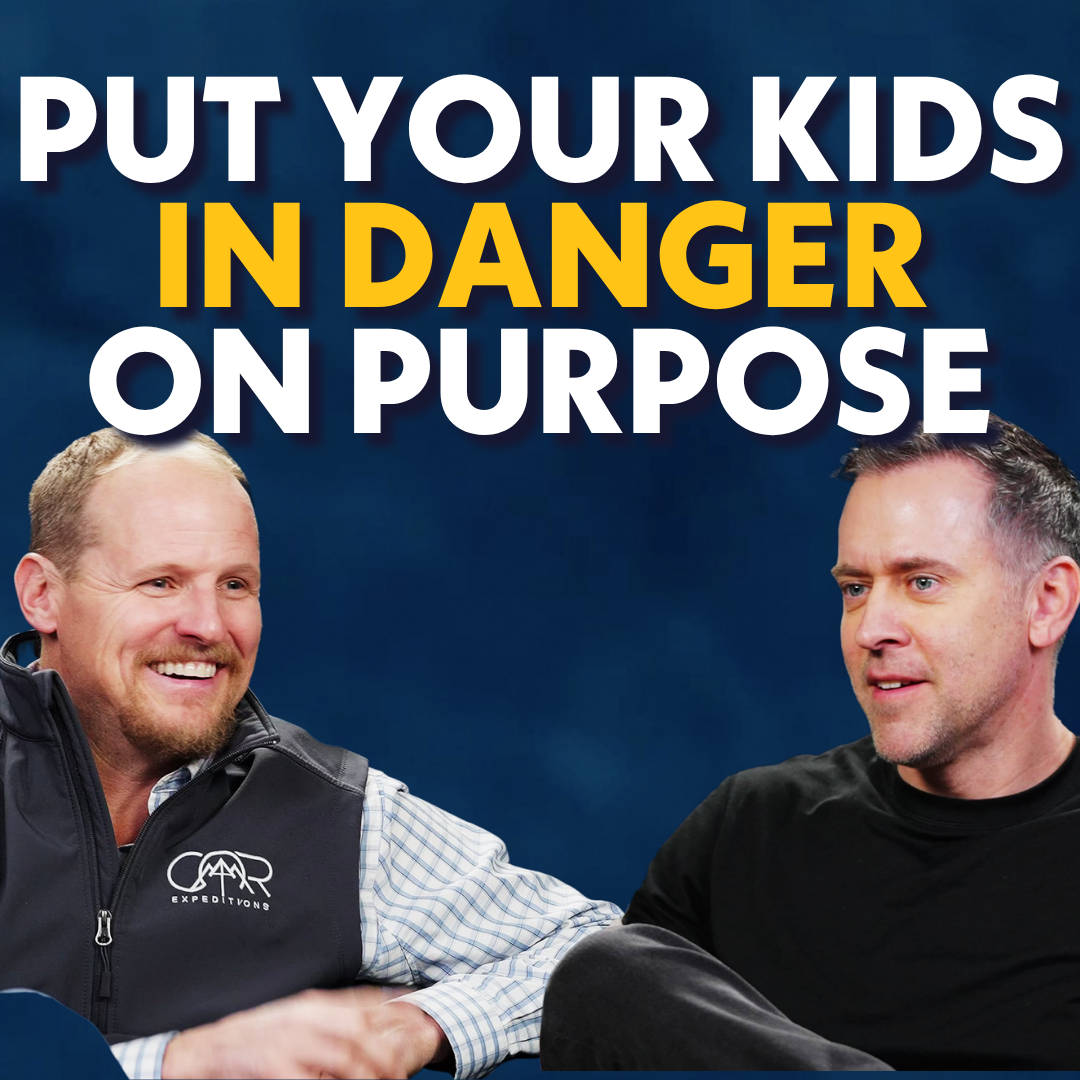
Roll with me here. This is going to blow your mind, talking to an expert on the topic who leads people to the edge in countless ways as an outdoor adventure survivalist kind of guy. Tom Zimmer, today on the Chris Stefanick Show.
Thanks for jumping into the danger with us. Welcome to the Chris Stefanick Show. We're here every week to give you what you need to live your everyday life with the joy that God made you for. Missionaries of Joy, thanks for making this work happen, guys. You want to become a missionary of joy? Click below this video, Help us change the world. You can also below this video, sign up for our daily anchor. That's our daily inspiration. It'll be the one thing you're really excited to open up in your inbox every single day. There's no strings attached. We just want to bless you. And this episode is also sponsored in part by our friends at ewtn. You can catch this and so much more goodness on ewtn. Streaming link is below in the show notes. Let's dive in.
Tom Zimmer, So good to have you back, man. I just love talking to you.
[00:01:31] Speaker B: Yes.
[00:01:32] Speaker A: You know, we grew up here in safety first.
[00:01:34] Speaker B: Yes.
[00:01:35] Speaker A: And you hit the adult years and realized actually, it's safety second or maybe safety third. Sometimes I think Mike Rowe is the first guy.
[00:01:41] Speaker B: Yeah.
[00:01:42] Speaker A: Oh, for sure.
You know, I was on a film shoot once and I had to feed a saltwater crocodile, and the thing was probably 16ft long.
And just looking at it, I've never had something look at me like I was food before.
[00:01:56] Speaker B: Wow. Yeah. Yeah, yeah.
[00:01:57] Speaker A: And its eyes kept going from the meat. I was hanging over it. To me.
[00:02:02] Speaker B: Whoa.
[00:02:02] Speaker A: And it was discerning.
If I could get you, that's what I'd do. But the meat's accessible. But the guy who took me out there, the guy, the zookeeper, he's like, okay, like, if you fall in, I can't do anything.
[00:02:15] Speaker B: Yeah.
[00:02:17] Speaker A: I'm like, would you shoot it? He's like, no. Like, like. And it would be too late.
[00:02:20] Speaker B: This is real.
[00:02:20] Speaker A: Yeah. And so we're going out there, and I thought he was kind of kidding around. He starts shaking. He's nervous to bring me out on this little bridge.
[00:02:30] Speaker B: Wow.
[00:02:30] Speaker A: Like, okay. Sometimes to do the job safety is not first.
[00:02:34] Speaker B: Yeah, yeah.
[00:02:35] Speaker A: And there's reasonable risk. We weren't being totally dumb. I wasn't swimming with the thing. Yeah, but that's, that's all of life. Like, there's a lot of times where safety can't be first. It's. Dude, Covid taught us this actually. If you put safety first above all things.
[00:02:47] Speaker B: Oh, totally.
[00:02:48] Speaker A: You do more harm than good.
[00:02:49] Speaker B: 100%.
[00:02:50] Speaker A: Yeah. While doing a little bit more good. You do exponentially more harm. If you don't balance it. Right.
[00:02:55] Speaker B: Or if you just have too much safety, people just throw it out. I actually worked in the mining industry for a little bit and OSHA required all these crazy things.
And so we sprayed concrete. Have you ever seen concrete on a wall?
On a wall where it like, keeps the wall, the rock fall from falling?
[00:03:13] Speaker C: Yeah.
[00:03:13] Speaker B: So this stuff is nasty. Like dirty jobs. Like, this was a dirty job.
[00:03:17] Speaker A: Yeah.
[00:03:18] Speaker B: If you touched it on your skin, the chemical in the concrete, because it dried so fast, oh my gosh, it was like really toxic. So OSHA required like full gloves, hat, mask. Like, you looked like you were wearing a hazmat suit. And it was so sometimes over the top that, that there were guys who worked there. Like once the foreman disappeared. They're like, literally nothing. Like smoking a cigarette with no hazmat suit. I'm the, I'm the like 22 year old. I gotta follow the rules and I'm like wearing all this stuff and like, it gets to the point where if. If it's so safety, people just throw it out instead of being like, oh, okay, I'll. I'll wear a helmet when I'm mountain biking.
[00:03:54] Speaker A: The job done.
[00:03:54] Speaker B: Yeah, you can't get. Yeah, you can't get the job done.
[00:03:56] Speaker A: I think of David and Goliath. They tried to put armor on him. He's like, I can't walk in this stuff. He actually would have died if he'd worn all that.
[00:04:01] Speaker B: So he's like, I'm not going to wear the armor because I can't function in it, dude.
[00:04:07] Speaker A: But no, your job involves a lot of calculated risk. And again, when I say be stupid.
[00:04:10] Speaker B: Yeah. No, don't be stupid.
[00:04:12] Speaker A: Yeah, where's the line?
Where's the line? When you're calculating risk? I mean, how far is too far? But tell me about your job and some of the risks you take and how you see, bringing people into calculated risk has a positive psychological, spiritual effect.
[00:04:26] Speaker B: It's fundamental to the thing that we do. So. It's fundamental to the thing that we do.
[00:04:29] Speaker A: Experts. It's not a necessary evil. It's part of the. It's a feature.
[00:04:33] Speaker B: Oh, it's a feature. If you come to Wyoming Catholic College, you as every student has to do a 21 day trip. Every student has to do a river trip. Every student has to do a rope based trip. What I mean by that is rappelling and, or climbing. Like, you have to, you're terrified of heights and you have to trust a rope to like weigh on it, put your weight on it and look down a hundred foot, 100 foot cliff. You have to do that.
[00:04:57] Speaker A: Wow.
[00:04:58] Speaker B: Just like you have to take Latin, you have to do Euclid, you have to study theology.
[00:05:02] Speaker A: That's all the same.
[00:05:04] Speaker B: We're forming the whole body. Well, you don't do that if you throw out half of the stuff that's really good for us. So, you know, and we, and again, it's all transferable. Like, like we're not trying to make the next mountaineer at Wyoming Catholic College. We're trying to make the next best Catholic, best human possible down the road. Well, how do we do that? We give them what we would call perceived risk or calculated risk. But yes. Is there some risk in going backpacking? Is it going to get cold? They do, every freshman does a winter snow caving trip where they live in snow caves.
[00:05:36] Speaker A: For how long?
[00:05:36] Speaker B: It's cold for, for three nights, four days. Three nights in winter in Wyoming Grand Teton national park.
Like, yeah, it could be minus 10 degrees. We're still out there. So it's challenging, it's difficult, it's cold. But every kid comes off that trip like, this was awesome.
[00:05:51] Speaker A: And they have a 21 day backpack.
[00:05:52] Speaker B: 21 days. Their freshman experience.
First class. Like, welcome to the college. 21 days in the backcountry of Wyoming.
[00:05:59] Speaker A: Wyoming.
[00:05:59] Speaker B: Yeah. And here's the thing. Like, do all the students, like, are they like, I want to be an outdoorsman? No. Like, a lot of them, like, they're there because of, of many other reasons. They're there because they want this amazing rigorous academic program. But they, but they also recognize, like, yep, I'm going to have to do it. And they go out and they, and they, they're challenged. And some people leave the trip. I've never had a student who didn't like it. They all come back being like, that was amazing. I've grown so much. But there are, there are students like, I don't need to do it again. And then there's other students who are like, I want to become a core instructor. And I'm going to lead future trips. And yes.
[00:06:29] Speaker A: Yeah, tell me about core, because core spun off from the. You were trained in Knowles? Well, you got your doctorate in outdoor education.
[00:06:35] Speaker B: I worked in the outdoor industry for 10 years.
[00:06:37] Speaker A: Start doing this stuff for Wyoming Catholic. Then you spin off Core Expeditions, which is serving not just Wyoming Catholic, but seminarians and stuff like that.
[00:06:43] Speaker B: Oh, yeah. We do over 100 trips a year for people who are not part of the college.
So we do 21 day backtrack trips for about six different seminaries. So they're men, they come out and need. Like, I always, I always talk about how kids don't climb trees anymore. So I started teaching rock climbing in 1994 at a climbing gym in Colorado Springs when I was in high school.
And my, my mentor taught me, like, when, when a kid gets up and they turn around and look at you, like, what do I do next?
You say, there's no rules. Just use your elbow, use your knee. Like, just get up the thing. And the go to answer in 1994 was, was, it's like climbing a tree. There's no rules. Grab anything you can and just get up the darn rock. Versus, like, what is the technical thing that I need to do to get up this? Well, the problem is, is in the last 10 years, you know, I still, I don't teach as much. I'm more behind a desk now. But when I am out there, sometimes I'll use that. I'll say like, yeah, it's like climbing a tree. And I've literally had multiple people who have turned around and said, like, I've never climbed a tree. And you're like, what are you talking about? You grew up in a world where you didn't climb trees.
And, and so. But here's the thing about risk. It's risk in the outdoor environment. A 21 day trip. Why are we doing that? Because 20 years from now or two months from now, when you have a difficult theology paper that you have to write, it's very transferable. It's like, I didn't think I could do a 21 day backpacking trip. There's grizzly bears, there's wolves, there's scary river crossings. But I did it. And I don't think I can succeed at this theology paper. Or I don't know if I can ask that girl. I've never asked a girl out on a date. Can I do that? Or like, should I apply for that job? Or should I be a priest?
Could I be a priest?
So if you don't have risk and challenge and difficulty, you're not going to be able to do it. And especially in our Catholic faith, so much is.
It's risky being a Catholic. We are going against the flow. It is challenging. We're asking big questions like, if you want an easy life, never ask why God would allow evil to exist.
If you want an easy life, don't ask that question. If you want an easy life, don't. Don't have to go. Like, as a ski patroller and people respected my faith, I certainly didn't like Bible thumb or anything, but, like, I was the one guy at the ski patrol and, and I won't throw the ski patrol industry under the bus too much, but, like, there's a lot of partying and raft guiding world and like, yeah, welcome to like, the, the. A bunch of college students who are being raft guides. And there's, there's things that like, like, if I didn't have the bold ability to say, like, no, I don't want to smoke pot. No, I'm not gonna, I'm not gonna engage in these certain activities. Like, I, if I didn't have the boldness of doing that, I would have, like, fallen right into those vices. And my brother's. Actually, my brothers have often said, how did you work in the outdoor industry for so long? And never do that stuff. I've never smoked a cigarette. I've never been drunk, like, which is crazy because I'm in an environment. And I went to a school where, like, they're a typical college.
[00:09:40] Speaker A: Yeah.
[00:09:40] Speaker B: But like, I went to Western State College, which is a great school. I love it. Saint Gunnison. But the nickname was, Was State College.
[00:09:46] Speaker A: Yeah.
[00:09:46] Speaker B: So I went to a school where, like, there's a lot of party.
[00:09:48] Speaker A: Yeah.
[00:09:49] Speaker B: And. And the reality is, is, like, I, I think, like, the risk taking behavior and not like, sketchy risk, but like, yeah. I mean, I kayaked, I ice climbed, I rock climbed.
[00:09:59] Speaker A: You found your own way to be B.A.
[00:10:00] Speaker B: but yeah, I was, I was bold enough to be able to say, like, no. I was also, like, happy with my identity. I didn't like, have to smoke the cigarette or do the drugs or get drunk with the guys to be like, part of the bros.
And so. But like, wow. And I also think risk actually gives you, like, the boldness to be like, no, I don't need that. Like, you look at. What is Hacksaw Ridge? Is that what it's called? Yeah, the movie where like this Christian comes in, he's like, I'm not going to shoot a gun. And then he does this amazing thing and, and he's bold enough to say, like, no, Even though everyone hazed him and bullied him and even his, his, you know, the officer and the general is saying, you need to do this thing. And he's like, no, I know who I am and I'm bold and I'm going to make a bold statement and I'm going to be tough. And if we don't give our kids risk, they're not going to, like, be the tough Catholic I think it was. Yeah, like, like so many saints have talked about. And we look at the saints of David and Goliath back to that story. Like, like David had the boldness to say like, I can do this because he had other previous life experiences that gave him like, the strength to do that. But if we live in a coddled world that's soft, like our joke, a term that we use at core all the time is like, don't be soft.
Like, soft is like, oh, it's, it's raining, I'm cold, I'm wet. Like, no, don't be soft. Like, it's raining. And I'm going to like, make sure all the students have their rain jackets on before I put my rain jacket on and be that servant leader. You, you cannot be a servant leader. You can't be a good dad if you're soft.
[00:11:30] Speaker C: Hey, friend. I want to invite you into something that's changing lives. Every single day, people all over the world are rediscovering their faith, finding real joy, and learning how to share the gospel with confidence. And guess what? These lives are forever being transformed because of our missionaries of Joy, our incredible monthly supporters. Everything we do, the Chris Stefanick show, life changing video series like Living Joy, Rise, Fearless and Renewed, our live events, it all exists because of them. And I want to invite you to become part of this movement. When you become a missionary of Joy, you're not just donating. You're stepping into a mission that equips, inspires and empowers you to live the gospel in your everyday life and to help others do the same. And that's not all. As a missionary of Joy, you get exclusive access to all our video series and empowerment to share them in small groups with friends. You get exclusive early access to new releases. You get Monday motivation texts direct from me. And you get access to our daily anchor, daily inspiration to fuel your faith. Here's the truth. The world is desperate for joy. People are dying for meaning. And together we, we could bring them the hope of Jesus. The question isn't if you can make a difference, it's will you click the link below. Join the mission today.
[00:12:54] Speaker A: Who'd have thought that the crisis in vocations might be connected to a crisis in tree climbing?
[00:13:01] Speaker B: I think so.
[00:13:02] Speaker A: And it's literally true.
[00:13:03] Speaker B: Yeah, I think so.
[00:13:05] Speaker A: Or kids being soft when it comes to sharing their faith is connected to that kind of things. It's all this blew my mind conceiving this for the first time and mulling this over. Like, every virtue is like a muscle. It's exactly like a muscle.
[00:13:18] Speaker B: Totally.
[00:13:19] Speaker A: And if you can lift a five pound weight, then you can also lift a five pound rock and you can lift a five pound, you know, whatever, make it 200 pounds. You could do that with anything. Yeah. And if you're courageous with climbing a tree, you can also therefore be just as courageous with sharing your faith. But I also love that men are looking for a way to be, to be tough.
[00:13:38] Speaker B: Well, for tens of thousands, you're going
[00:13:40] Speaker A: to over drink if you don't, if you don't know how to climb a rock wall.
[00:13:43] Speaker B: It's funny, my dad, when I first started entering the outdoor world and like, I'm going to go get a PhD in this, and he's like, what are you doing? And, and, and then especially when I started core, and I said, hey, dad, like, let me tell you what I'm going to do. He kind of, he kind of was like the good dad who kind of like, why, why do, why do we need to have the outdoors? Like, why do you need to take seminarians out there? And I was like, dad, let's be clear. You grew up in a world where he was born in 1938, North Dakota farmer. Like, he had experienced life and death at a way that like, so by the time he was, the way I describe it is by the time he was 10 years old, he had more like real life experience. Like a parent that had died, uncles and aunts going to war. Like, real hard things. Like, like having to like help a cow, like give birth and, and then having to put down an animal because it's injured. Like, when I was 12, I was like, I was swinging a tennis racket. Like, I was hoping I'd like make it to the next round of the tennis tournament. Like, that was my challenge. By the time I was 18, I still didn't have like real risk and real challenge the way that he did. So I tell, as a dad, you had the outdoor education life, you didn't need outdoor education. In your childhood because you lived it.
Well, now we don't even go outside anymore. We live in these, like, houses and buildings where, like, everything. We don't. We're not afraid of lightning. I'm terrified of lightning because I've been on top of a tower in Rocky Mountain national park where literally there were sparks flying off of the ice axes of. And I couldn't touch my carabiners because there was so much electricity in the air. Like that. That is like. That's my dad who got enlist, who had to go to war because there was a draft during his age. We didn't grow up with the draft.
We didn't grow up with the fact that, like, when I turn 18, I might have to go to war and kill somebody or be shot at. Like, we live a pretty soft life, which is good. Like, don't get me wrong, it's not like I want it. I want war to happen, but, like, we don't live and for tens of thousands of years, like, go back all the way to hunter and gather time frame, right? Like, I have to go out and fight the saber tooth tiger or I have to go kill a woolly mammoth. And then. And then, like, all the wars that, like, I mean, pre. Like 1900s, you pretty much grew up in a world where like, yep, I might have to go to war. Like, yeah, I have to be a man and I have to be ready. That's how Outward Bound, if you've heard of Outward Bound and Knowles Outward Bound came out of. Curt Hahn, who was. Who the. The. The crisis was after World War I. All these sailors were dying, and, and they, they didn't survive in the life rafts, but they did for tens of thousands or thousands of years before in, like, naval warfare. And they found out that, that, that. That the men who were in the military couldn't handle the. The challenge of being stuck on a life raft. So he started Outward Bound. It was all about sailing and teaching these men how to, like, deal with resiliency and being. And. And to deal with, like, yeah, we're stuck out on here and we need to, like, we need to survive.
[00:16:40] Speaker A: We can't. We don't have resiliency right now.
[00:16:41] Speaker B: We just don't.
[00:16:42] Speaker A: Don't. I heard this great saying. I'm gonna get it wrong. But, like, hard times produce strong men. Strong men, you know, save the world or whatever, and then they produce good times, and good times produce soft men, and the soft men produce hard times, and then hard times produce cycle.
[00:16:57] Speaker B: In a place where we're Gonna relapse. Totally.
[00:16:59] Speaker A: So when we're in the soft times, we have to get intentional about making strong men and women.
[00:17:04] Speaker B: Yes. Oh, 100%. Yeah.
[00:17:06] Speaker A: Yeah.
And it's in these unexpected ways that can make people tough. By the way, what's the link to Core Expeditions?
Because anybody can go on the core expeditions. Oh, yeah, yeah.
[00:17:16] Speaker B: Core Expeditions. So C O R Catholic Outdoor Renewal. And it's Latin for heart.
[00:17:21] Speaker A: So corps confirmation program's called. Yeah.
[00:17:24] Speaker B: Oh, yeah. Okay.
[00:17:25] Speaker A: But we're wordplay.
[00:17:26] Speaker B: Yeah. So we don't have the e. So it's cor expeditions.org and if you go to wyomingcatholiccollege.edu wyomingcatholic.edu it's. You'll find the link.
[00:17:36] Speaker A: Okay, we'll link to that stuff below the video.
[00:17:37] Speaker B: Yeah, that'd be awesome.
[00:17:38] Speaker A: So what's happening? What's happened in the world? Like the, the risk tolerance has gone so far down. Yes. There's studies done in the 90s versus today. Like what's, what's going. How bad is it?
[00:17:47] Speaker B: The, the era we grew up with and the era that our kids are growing up with. So there's probably like three main things that we can point at. Number one is a litigious society.
So I don't want to get sued. I grew up in the 90s, in the 80s, really, with a trampoline in our backyard. And my friends had to sign. Their parents had to sign a waiver. My kids, my, my dad was like, I don't want to get sued.
[00:18:08] Speaker A: Oh, your dad was ahead of his time.
[00:18:09] Speaker B: Oh, he was ahead of his time. So there were kids at my birthday party as a 10 year old, I remember to this day who didn't get to jump because their dad didn't want to sign the waiver. So litigious society. Number two, the media.
We did not grow up with Amber Alerts. I like Amber Alerts. It's a great idea. But the problem with amber alert and CNN, meaning 24 hour of news, they have to find content. So if you have to find content, you're going to. When we, when, when, when we were in high school and we were in middle school and grade school, our parents did not know that a kid was abducted in Florida. Now we know a kid is abducted in Florida. So here's a really interesting study that came out. So they did a study in like the 80s of like the distance that you would let your 10 year old ride their bike or just on their own. And remember, this is pre cell phone. How far would you let your 10 year old leave your home. And so I think in the 80s it was like six miles is how far a parent would do that. They did the same research in early 2000s and it had shrunk to half. So it was three miles at the time. When I read the study in graduate school, my brother had a 12 year old. So I was like, John, like, how far do you let Zach, his oldest boy was around 12 years old. I was like, how far can he ride? And he's like, well, I let him ride to that kid. He's like, it's probably about three miles. And I said, how far did you get to ride when you were 10? Think about like the friend that lived the furthest away. And he's like, I don't know, probably like five or six miles. It was like to a T. And I thought of myself. I didn't have kids at the time, but I did think about like Eric Breeze was my good buddy. And I was like, oh yeah, he lived pretty far away. Well, why did that happen? So here's the thing. Belief. The belief is that we live in a more dangerous society.
We think that there's more child abductions, there's more danger, all this stuff. The reality is, if you look the statistics in the 80s versus the early 2000s, there's actually less child abductions, there's less kidnappings.
But our brain thinks. And I asked him, I was like, why wouldn't you let Zach go six miles? He's like, oh, it seems too dangerous. So. So media has skewed our world of thinking that like, because one kid drowns, oh my gosh. I can't let my kids swim anymore without. Without the water wings. One kid gets hurt on a bike. I can't let my kids do that thing. So there's that. And then thirdly, it's the perceptions of wild.
[00:20:17] Speaker A: I leave pilgrimages to the Holy Land and it's so dangerous. Okay. When things go wrong, they go really wrong.
[00:20:23] Speaker B: Yeah, totally, totally.
[00:20:23] Speaker A: But. But I had people reaching out to us. Cause there was a guard was stabbed by an activist. And then people were like emailing and reaching out to a girl. Are you guys okay? I'm like, you realize we're in a major city and there was a targeted political stabbing of one person.
[00:20:40] Speaker C: Yes.
[00:20:40] Speaker A: Yeah, yeah. If you're in Chicago today, I should be emailing you.
[00:20:43] Speaker B: It's way more dangerous than you and
[00:20:44] Speaker A: saying, are you okay?
[00:20:45] Speaker B: Yes, totally.
[00:20:46] Speaker A: Cause I could walk at 2 in the morning through Jerusalem and feel totally safe. It's like, it's way.
[00:20:50] Speaker B: The perception is way more.
[00:20:51] Speaker A: Yeah, it's crazy.
[00:20:53] Speaker B: So media totally skews our mindset of that. And then thirdly, like, we just, the. The whole world has been designed to be more safe. Like, so in other words, we didn't grow up wearing helmets and elbow pads and knee pads around it, around our neighborhood. And now like, my kids some dirt in it. Yeah. Oh, totally. Like a comedian talked about, like, our scabs were our knee pads and our elbow pads. Like, you fall, you get a scab. Like, that's your new knee pad.
[00:21:17] Speaker A: God gave you a knee pad.
[00:21:18] Speaker B: Totally. And does my four year old, when I take her legitimate mountain biking, wear knee pads, elbow pads, gloves, and a helmet? Yes.
[00:21:25] Speaker A: Yeah, it's a good idea.
[00:21:26] Speaker B: But when she's going around the cul de sac, like, I'm not wearing a helmet, but the whole world, I mean, and there are great inventions. Don't get me wrong. I'm glad helmets are safer. My trampoline, growing up, we didn't have trampolines with like the little wall around it. Now all trampolines have the wall. And at first when I saw it, I was like, that's such an eyesore. It's dumb. But I've seen my kids, like, and I remember as a kid, like a kid getting like double bounced off the trampoline and landing on their head and like, okay, so there are good inventions, but it's so safety first mindset that we're not allowing our. And, and here's some examples of, of raising kids in my world. So a lot of people think I'm nuts. They think I'm crazy, and I shouldn't be doing these things with my kids. But my kids don't have like any more accidents than any other family. In fact, I would argue that they have that kids who are exposed to risk as a kid, there's a lot of research behind that, that they actually learn to mitigate it better. And what I mean by that is, like, my kids, I have a stairwell in my house and I have a slide on it. And I put a slide on it from the top of the stairwell all the way down.
[00:22:26] Speaker A: No way.
[00:22:26] Speaker B: And then above the slide is a rock climbing wall, you know.
[00:22:30] Speaker A: In your house?
[00:22:30] Speaker B: Yeah, yeah. You know, your stairwell.
[00:22:32] Speaker A: I want to be one of your kids.
[00:22:34] Speaker B: I built it during COVID because my kids were going nuts in the house. And I was like, we need something in here. But you know, stairwells like this and the stairs go up like this. Well, up here is like 15ft above the bottom of the step here, you know, it's a pretty high like distance.
[00:22:45] Speaker A: Yeah, that's cool.
[00:22:46] Speaker B: So I've got a slide and then I've got a climbing wall to a little fort and then I've got a net, like a black net that goes across the top. And my three year old, by the age of three, my kids could start to climb the wall to the fort. They'd shut this little hatch, they'd get up on top of the black net, go over to the top of the stairs, and then they could hang from the net, which is about six feet off the ground. Three and drop. Three years old? Yes. Like, and so why could they do that? Because they saw their older siblings doing it. Back to something.
[00:23:13] Speaker A: That kid is actually safer walking around outside.
[00:23:16] Speaker B: Yes.
[00:23:16] Speaker A: Honestly.
[00:23:16] Speaker B: Oh yeah. Well, I love actually who's the, the best skateboarder ever? Tony Hawk.
[00:23:21] Speaker A: Tony Hawk?
[00:23:22] Speaker B: Yeah. Tony Hawk was doing on YouTube, he had a video of him with his like three year old daughter on a skateboard going up and down. Not crazy tricks, just up and down a 15 foot half pipe.
[00:23:31] Speaker A: Wow.
[00:23:32] Speaker B: And Mothers against, I think it was Mothers Against Drunk Driving, which is an advocate group of like anything that is bad. And they, they, they on social media they like tried to cancel him. You're dangerous to your daughter. And this is what his response was. He's like, you have no idea who I am. I am so good at skateboarding. It's safer for me to do this than for you to walk down the street with your child. And I was like, yes, right.
Like when people see, people are shocked that like I'm not the only one who takes my three year old skiing. But like, I mean in the kayaking world, even I don't see kids kayak and my kids kayaking class. Four, he's 14 years old. My daughter just learned how to do a roll.
[00:24:14] Speaker A: Dude. How are you seeing this change? Like for instance, you lead seminarians on positions. How does their life change?
[00:24:21] Speaker B: Well, first of all, I have to say the vocation directors are the ones who say like, we need this. When you call Cora and say I want to do a custom course with you, first thing we say is like, what do you, what are your goals? And so when, when the first vote, when the first seminarian called in 2015 and they, I said, what are your goals? He said, well, our men need grit. Like, and the guy who's talking to me is my age. And he's like, when I was in seminary. He's talking about when he was in seminary 20 years ago.
Men had grit. He's like, our men are entering seminary and they don't have grit, they don't have resiliency. They, they haven't been challenged. They, they grew up with. In the smartphone world, you and I did not grow up with a smartphone by ourselves, like by our sides. 20 year olds now they grew up in a world that was, that always had smartphones kind of crazy. And so, so basically what they're saying is our need is men need to grow in resilience. So what are we seeing? We are seeing. It's, it's one of probably the most important things that we do, obviously, like the God experience.
But to grow in grit, to, to, to get your fingernails dirty, to, to have physical pain. Like it's normal for a four year old. When I take her skiing, I took my 4 year old and like the first day out, we're at Snow Basin and she's like, my legs hurt. I'm like, yeah, that's called like being sore. But she's like, my, my legs hurt.
That's fine. For a four year old.
[00:25:47] Speaker A: Yeah.
[00:25:47] Speaker B: When a 20 year old says, my legs hurt from walking and they've walked like three miles, like back in Aristotle's day, they walked 20 miles a day. That was the norm. Now we get in a car, we ride on a bus, we don't do much physical activity and our bodies can't handle it. If you can't challenge yourself physically, how far can you push yourself spiritually? How far can you challenge yourself socially, emotionally, psychologically, intellectually? Like, it all builds off each other. You could be like the most intellectually challenged. That's what I love about Wyoming Catholic College. It's the whole person. So many schools say mind, body, spirit. Whole person, like, hold on. Like whole person. Like, if you are not physically challenging yourself, how can you spiritually challenge yourself? You could be the smartest intellectual guy in the world, but like, you can't physically challenge yourself. Like, you need, you need the whole person. Because it all helps each other out as well as the fact that, you know, you can only study for so long before you're like, I need to go. Whether it's racquetball or run around the house, like, I just need to. Your mind actually becomes more focused when you're physically, like when you get some physical energy going.
So, yeah, our men are seeing it. One great story we have is a seminarian. I won't say where, but a seminarian, overweight seminarian, didn't do much physical activity and he gets to the top of day one of a 21 day backpacking trip. Day day one, he gets to the top of a pretty small pass compared to the future pass.
Yeah. Gets over the past. He gets to the top, he drops his pack and he falls to the floor to, to the, to the, to the ground. And he's just sitting there and he asks the instructor to come over. Instructor comes over, he sees him on the ground and, and of course, the instructor knows, like, out of the whole group, like, he's going to be the one that's going to struggle the most.
[00:27:28] Speaker A: Yeah.
[00:27:28] Speaker B: And he just goes, I'm willing to drop $10,000 from my bank account. Call the helicopter now. Get me off this course.
And our instructor's like, no, like, we can't do that. You can't just like call for a helicopter. I don't care if you have. I don't care if you're the richest man in the world. Elon Musk can't call for a helicopter in the wilderness. It's actually illegal to land a helicopter in the wilderness. So, like, it's not happening.
But also it was like, you need to do this. Well, he straight up is like, I can't do this. Like, I need to get off this trip. Like, you need to evacuate me. And my instructor, great guy, like, knew what he was doing.
He walked him through, like, motivation stuff that we've talked about before.
And next thing you know, like, he starts having success. My pack isn't as heavy as it was. We are eating food. The pack's weight is getting lighter. Like, I can succeed. Well, at week one, every seven days, you bring in horses like 20 miles in with food. So you're not carrying 21 days of food.
[00:28:22] Speaker A: Yeah.
[00:28:23] Speaker B: So the horses, he's like, I could ride out on the horse.
But by that point, he was bought into the trip. He had relatedness. Like, he had friends. Like, he had grown more with those guys in seminary than living with them during the entire propa year. This is at the end of their propa year. At the end of the trip, multiple guys started coming up to our instructor. You got to make him an mvp. And he ended up, he ended up being like the guy that everyone was like, you grew the most on this trip, Praise God. And so here's this guy who, if we had just, and I'm not saying like we did something amazing, we put him on a backpacking trip. The fact that though I will say it's amazing that we didn't evacuate him because Sean, who was instructing the course, could have Just been like, you know, like, he is slowing down our group. We're not getting the miles that we should get. Like, he is not physically ready for this. If he had evacuated him, the other men wouldn't have grown vicariously through him, but also he wouldn't have grown. And I guarantee he's going to be a better priest because of it.
[00:29:19] Speaker A: 100%.
[00:29:20] Speaker B: 100%. And all the men that were on that trip who got to see him grow, and those men were challenged too. So it doesn't matter if you're like, you look like a pretty fit guy. Like, if you go on a backpacking trip. If I go on a backpacking trip and I go all the time, like, I'm still gonna be challenged. And, and, and it's. I. I can tell you there are so many things in my life that I've had, like big crosses in my life that were so much easier because I used to climb big mountains. I used to Kayak Class 5. I used to do like really crazy, scary, dangerous things. But I also did it in a managed way. So when we talk about risk, we're not throwing out safety. So I'm not saying go let your kids get hurt again. My kids don't get hurt. Like, they don't have crazy injuries, but I let them do things that most parents would think are crazy, you know, and like, why would you let your son. The funniest is like, you go to a park these days, a kid going up the tornado slide in reverse. What are you doing?
So it's rule oriented, but it's also risk. Like, what if a kid comes down? What if a kid comes down? It's happened a lot. A kid comes down a tornado slide and runs into the die and they laugh about it. They run into each other and they laugh about it. But like, parents are so, like, risk adverse. Like, they do not want any risk. They don't let their kids.
[00:30:35] Speaker A: So. Yeah. What's the first step? Well, honestly, with ourselves, a lot of us live in comfort.
Whether it's challenging myself or in raising my kids, maybe I don't live in Wyoming. Like, you have a lot of cool stuff right there.
[00:30:49] Speaker B: There is for sure.
[00:30:50] Speaker A: Maybe I'm in Iowa. I don't quite have the money for a corps expedition. Just maybe one or two or three things to start. To start taking.
Living a slightly more dangerous life. Because I think a slightly more dangerous life is also a life where being a little bit more of a disciple of Jesus. Yes, totally. He said walk on water. This is not a safety first. Relationship.
[00:31:10] Speaker B: Yeah. Oh, totally.
[00:31:11] Speaker A: Yeah.
[00:31:11] Speaker B: But since you brought up Jesus and let's talk about the saints. Like, you look some of these amazing saints.
[00:31:17] Speaker A: Oh, Yeah.
[00:31:17] Speaker B: I mean, JP2, like, he's taking people out in the woods for Saudi. Same for Saudi.
[00:31:22] Speaker A: Yeah. That's connected to why he was so bold with the communists. Here's a guy who walks up to the president of the country, the unelected communist president.
[00:31:28] Speaker B: Yeah.
[00:31:28] Speaker A: It just says, this is all going to change, you know? And the guy starts shaking in the president of John Paul, too. Well, that was probably formed by a guy who spent his life in the mountains.
[00:31:36] Speaker B: Totally bold. He's strong. He's not soft.
[00:31:39] Speaker A: That's cool.
[00:31:40] Speaker B: Yeah, totally. So, like, get outside. Like, a lot of it is, like, I don't feel comfortable being in a social setting. Like, go out and be with your friends. Don't worry about if you're not the greatest thing. Our ego gets in the way, especially for men. Way too much. Go out, get away from your phones. Go outside in a building. It's a controlled environment. Go outside, be exposed to the rain. You can do that in Iowa. Like, go on a long hike where, like, you're gonna feel sore. You're gonna do those things. But don't be afraid of risk. So see risk as a challenge. Like, here's the thing. So I used to. I joined a rescue team, and one of my mentors on a rescue team when I was in college was like, if you ever have a heavy pack, or you have to carry somebody else's pack, or you have to do something that's uncomfortable, chalk it up to training.
And so I started having that mindset on a rescue team or, like, as I was guiding. So, like, I gotta carry this kid's backpack. Like, here's an extra £50. I started enjoying it. I would want to carry two packs, one on my chest, push on that back to push myself because. And then now I think of it as, like, this is training for, like, being a good dad, or, this is training for being a good professor.
[00:32:49] Speaker A: I do this. You do this at the gym. Honestly, it's a controlled environment, but, like, it's gotta be uncomfortable.
[00:32:55] Speaker B: As parents, it's easy to say, like, give your kids risk. As an individual who's 40, 50 years old, like, how am I gonna, like, do that to myself? But I think groups where you have accountability. XS90 is a great example. Like, it's really hard to do the things that Exodus 90 is asking you to do. But when you have bros who are with you, who help you do that. So you can't just do it on your own. Find someone that's gonna hold you to the challenge and be willing to take a risk. And don't be afraid of. Let your kids do difficult things and
[00:33:28] Speaker A: get your kid in a climbing gym.
[00:33:29] Speaker B: Get your kid in a climbing gym. Honestly, get your kid to do things that are challenged.
[00:33:34] Speaker A: My daughter and son in law just joined a gym with a climbing wall and just, you know, I can see them raising their kid that way. Just all these little things, you know, and more than specifics, what you, I think you just opened up for me and for people watching is just a reminder of how important calculated risk is.
[00:33:49] Speaker B: Yes.
[00:33:49] Speaker A: And to look for ways to take them. And it's not just important for your physical fitness, it's important for your spiritual fitness and for becoming a saint. Just become. Because saints are tough, man. Saints are tough. Just look for the little things, little discomforts, maybe even that's like Lent comes along. It's like time for little sacrifices. Like, you know, just lean into that part and you'll find things. Reality will show you ways to do this. Yeah. This was an awesome conversation. Yeah. I really appreciate this, brother.
[00:34:15] Speaker B: Absolutely.
[00:34:15] Speaker A: Thank you so much. God bless you guys. Thank you so much for watching Take a Risk, Be a saint. Love you. See you next time.