Episode Transcript
[00:00:11] Speaker A: Suicide rates are on the rise. If you're watching this, you probably have a friend or family member or someone you know who has died by suicide.
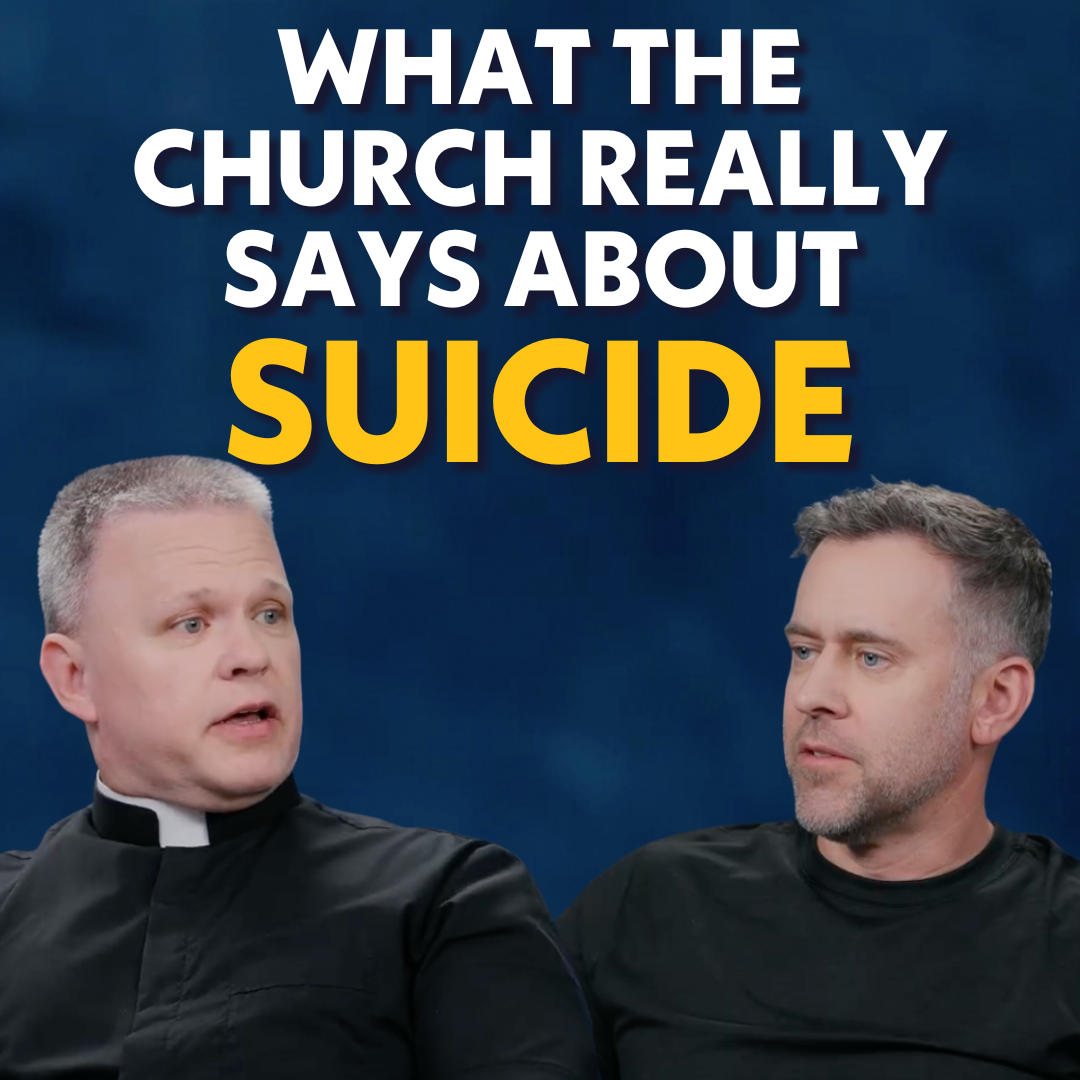
And a lot of people have no understanding about how God thinks about suicide or the souls of. Of those who have died that way. Some people just despair and think, well, they must be in hell. Well, I want to blow your mind with the mercy of God and give you a word of hope. We also want to equip you with some really practical tips for how to deal with someone who presents themselves as having suicidal ideation. All that today on the Chris Stefanik Show.
Welcome to the Chris Stefanik Show. We're here every week to give you the tools and inspiration you need to live your everyday life with joy, even when life is sometimes unbearably difficult. God's there with you. So are we. Thanks for letting us be. Let us be in your daily life. Click below this video. Sign up for the Daily Anchor. It's how we inspire you every day.
Zero strings attached. Missionaries of Joy, I want to thank you. It's because of you that we're able to share the hope of Jesus Christ with the world. Click below this video and become a missionary of joy today.
This episode is sponsored in part by ewtn. You can catch this and so much more on ewtn. Streaming link is below in the show notes. Let's dive in.
Father Chris Alor.
[00:01:38] Speaker B: Thank you.
[00:01:38] Speaker A: Yeah, it's really. I've been looking forward to this for a long time.
[00:01:41] Speaker B: Well, I appreciate your time and I love you guys work and thank you for doing what you do and keep up the good work of what you do.
[00:01:49] Speaker A: The feeling's mutual.
[00:01:50] Speaker B: Yeah.
[00:01:50] Speaker A: I love your YouTube stuff.
[00:01:52] Speaker B: It's been busy, but good.
[00:01:53] Speaker A: Yeah, yeah. And way to stay fit.
[00:01:56] Speaker B: Oh, man.
That's mostly because the doctor's been yelling at me, so, you know, I cut out carbs. Here's all I did. I cut out pastas, breads, pastas, sodas, and desserts and started watching my carbs. I lost £10 in a week and a half.
[00:02:12] Speaker A: Get out of here.
[00:02:13] Speaker B: Unbelievable.
[00:02:14] Speaker A: It's really amazing. Like, you don't. It doesn't have to be, like, complicated. Just eat the sandwich without as much bread.
[00:02:19] Speaker B: Exactly.
[00:02:20] Speaker A: Which is a little hard to do on the East Coast.
[00:02:22] Speaker B: Yeah, yeah, yeah. It's good bread. I could live off bread and pasta, but now I'm trying to do more of the protein and the meat and the fish and less of the breads and the carbs.
So far, it's been helping.
[00:02:33] Speaker A: But you're 56.
[00:02:35] Speaker B: Yeah. Crazy, huh?
[00:02:36] Speaker A: And lifting and wrestling and got back into wrestling at 56. Yeah.
[00:02:43] Speaker B: It's insanity in some sense. My cousin was way better than I was. And he still coaches and still gets on the mat with those guys. So we kind of have it in our blood in our family. As I always laugh when people meet me. Father, I thought you were taller. I said, well, hey, I'm a wrestler, not a basketball player.
[00:02:59] Speaker A: Yeah. It gives you a kind of an unfair advantage like this little. Like, what do I even do? Wrestlers.
[00:03:05] Speaker B: We're crazy, crazy, crazy.
[00:03:07] Speaker A: There is something about it, though, that it kicks up all sorts of endorphins when you're in that fight situation, you know, because it's not an actual fight. No one's punching you in the face competition. Right. But, like, you are, like you're grinding someone in the ground and getting your face smashed. And it's, and it, the, the fear hormones, I think, are getting kicked up. It's just, I don't know why it's good for you. It's my theory that it is because it brings you to life.
[00:03:30] Speaker B: Yeah. But, you know, we were, we were talking before the show. I, I, I went through a period there where I was just buried so much in, in paperwork as the provincial superior and traveling. I wasn't eating right, I wasn't exercising. I tell you now, exercising and getting a good workout in, and eating right, you sleep better, you feel better, your temperament's better, you're not as edgy.
And mainly to me, it helps living virtue, everything with, you know, you're still a man, you still have natural, you know, hormones, but it helps with chastity and just, you know, the way that you, you view things. And so, you know, people say, oh, father, that's vanity. I think it's actually instrumental to helping me 100%. Yeah.
[00:04:14] Speaker A: Yeah. And people bypass the natural looking for spiritual solutions.
And those are, I mean, obviously, we're in the business of the spiritual solutions. Right.
But counselors, too, they might bypass the natural looking for, you know, let's dig into your past. And there's so many times where a guy's thinking, you know, I don't feel confident. And I'm thinking, so just try deadlifting first.
That's awesome.
And then if that doesn't work, go look at your past.
But I'd like to see a couple.
[00:04:44] Speaker B: An hour might be a quicker fix. Saves money.
[00:04:47] Speaker A: Yeah. And it really does help with depression.
[00:04:49] Speaker B: Yeah.
[00:04:51] Speaker A: Not for everyone.
[00:04:52] Speaker B: There's more confidence.
[00:04:53] Speaker A: Yeah, that's right. Yeah, that's not what we're here to talk about today. That's a really fun segue.
You wrote a heavy and beautiful and amazing book. And thanks for going there. After suicide.
[00:05:06] Speaker B: It was the most confusing thing to so many Catholics.
I grew up Catholic, you, others, and so many people were taught that once you take your life automatic, guaranteed, you're in hell.
And so when that happened with my grandmother, we had never had a suicide in my family, ever. And when it happened to my grandmother, it changed everything. And so once I learned what really was the Catholic Church teaching, once I learned that we have a merciful God, and once I learned everything I had been told was actually not accurate, or at least fully accurate, changed everything for me. And that's what led to eventually, even the priesthood.
[00:05:53] Speaker A: Incredible.
[00:05:54] Speaker B: Yeah.
[00:05:55] Speaker A: Spell out that. That line of thinking where people are connecting theological dots that are independent of each other are true, that there's grave sin, that there's mortal sin, that suicide is grave matter. And then. And therefore, you know, spell out the wrong line of thinking and why so many people hold that line.
[00:06:12] Speaker B: What we were taught, and I went to Catholic grade school and high school, what we were taught was that suicide will result automatically in damnation.
And the reason why is because there's no time to repent.
You make that choice, and there's no time to repent now.
[00:06:28] Speaker A: And the presumption that the grave sin is always a mortal sin, there's a lack of distinction right there.
[00:06:33] Speaker B: You got it.
And that's the focus that we take in the book.
After suicide, there's hope for them and you. Because what people seem to forget here is that there's three elements for a sin to be mortal. Now, the only way you are lost, your soul is to die in an unrepentant state of mortal sin.
But I always throw people at my conferences with this question, is abortion a mortal sin? And everybody, everybody always yells, yes.
My answer, we don't know. And the reason why is because my very first trip to an abortion clinic in Minnesota when I was a seminarian, there were women walking into the clinic, and all the people praying were Catholics.
And one woman started screaming at one of the ladies walking into the clinic, don't go to hell. Your choice is gonna send you to hell. And the woman stopped. I'll never forget this.
And she confronted the woman. The young lady going into the clinic confronted the woman.
Now, granted, the woman that was praying, her intent was good, but her delivery was not.
She said, you think I want to kill this baby? You think that's what I want. That's not what I want. I want this baby. I want to have this baby. So the woman says, well, then don't go in. And she says, you don't understand my boyfriend. So it wasn't even a husband, said, if I have this baby, he will kill me and the child and make it look like an accident.
And she said, you don't know my boyfriend. He will. She says, we'll leave him.
And the woman says, you think it's that easy?
She says, I'm in over my head. That you can't even imagine, lady. And I'll never forget it. Because the three conditions for a grave sin to be mortal, it's got to be grave matter. Now, abortion is mortal. I'm sorry, Suicide is grave matter.
You must have knowledge that it is grave matter, which most people know. Suicide and abortion are grave matter.
But it's the third condition, free will, that I think on both of those cases with the woman at the abortion clinic, she did not have free will. This was a threat, a fear of going in, I should say not going into the abortion clinic, that her boyfriend was going to kill her and the baby.
She did not want to go in there. She did not want to have that abortion. Now, my view of it is I'm not so sure that we can condemn that woman for being guilty of mortal sin, because there's no free will there.
Now, I'm not condoning in any way 100%.
[00:09:16] Speaker A: Yeah.
[00:09:17] Speaker B: Of abortion, but there are more to it. This is why God is God and we are not, because who are we to judge? I know Pope Francis got attacked for that statement and the media kind of spun it in a certain way, but it really is.
Somebody can be what appears to us in mortal sin, but we don't know the free will behind it. And so suicide is the same.
My grandmother did not want to take her life.
She fell under what Catechism 2282 really spells out, and I never heard of that before my grandmother took her life. And that is there are mitigating circumstances. Depression, anxiety, mental illness, grave fear, suffering.
My grandma suffered as long as she could.
I am not by any means saying what she did was okay. It isn't.
Suicide is a permanent response to temporary problems.
But she tried. She tried to hang on.
She couldn't. And if you read Catechism 2282, these can mitigate the culpability.
So to answer your question, the Church would teach that, or, excuse me, people thought the Church would teach that you are automatically lost, gone to hell, because there's no time to repent. But what they didn't factor in is there's an element of mortal sin called free will. That a lot of times people who take their lives. Put it this way, Chris, you know it as well as I do.
Anybody that would go to that extreme to take their life cannot not have some kind of a mental problem. And I don't mean problem meaning that they're not a good person or whatnot, but it could be depression, it could be anxiety.
[00:11:06] Speaker A: They're not in their right mind.
[00:11:07] Speaker B: Yeah.
[00:11:08] Speaker A: Hey, friend. I want to invite you into something that's changing lives. Every single day, people all over the world are rediscovering their faith, finding real joy, and learning how to share the gospel with confidence. And guess what? These lives are forever being transformed because of our missionaries of Joy, our incredible monthly supporters, everything we do, the Chris Stefanik Show, Life changing video series, like Living Joy, Rise, Fearless and Renewed, our live events, it all exists because of them. And I want to invite you to become part of this movement. When you become a missionary, Joy, you're not just donating. You're stepping into a mission that equips, inspires, and empowers you to, to live the gospel in your everyday life and to help others do the same. And that's not all. As a missionary at Joy, you get exclusive access to all our video series and empowerment to share them in small groups with friends. You get exclusive early access to new releases. You get Monday motivation texts direct from me. And you get access to our daily anchor, daily inspiration to fuel your faith. Here's the truth. The world is dying, desperate for Joy. People are dying for meaning. And together we could bring them the hope of Jesus. The question isn't if you can make a difference, it's will you Click the link below. Join the mission today.
My best friend at the time, when I was working in Wisconsin, he was director of family Life, died by suicide.
We found out long after the fact that he was, you know, he was convinced somehow that if he didn't take his life, his children would end up in hell. He was very, very delusional.
[00:12:50] Speaker B: There's mental issues there. Yeah.
[00:12:52] Speaker A: How old were you when your grandma took her life?
[00:12:55] Speaker B: It was funny because she took her life in 1993.
And so I was 34 years old when she took her life. And it. No, excuse me. 20.
I was born in 69. 79. 89. Yeah. So 20. It was in my. My 20s. I apologize.
And I was just out of college and it really impacted me.
And so When I was in college, I was. I was 23. I just graduated. And it was nothing our family had ever dealt with before.
[00:13:32] Speaker A: Yeah.
[00:13:33] Speaker B: And it was a shock. It was.
But, you know, it's so interesting looking back now, once it happened, my family never talked about her, really.
My dad was his mom, my mother, my sister, my cousins.
[00:13:53] Speaker A: There's no processing.
[00:13:55] Speaker B: Nothing was discussed.
Nothing was discussed. You know, there's five stages of grief that we talk about in the book.
The first stage of grief is denial.
Then it goes into anger. People get mad. You know that, why did this person do this?
Then you get into bargaining, like, if I just would have done something different, if I just would have, I woulda, shoulda, or coulda.
Then you get into depression because it just. You realize that you have this life without this person. But then the final stage is acceptance.
We never got into those stages of grief because we never got past denial.
And as a family, and I think a lot of that was, you know, you hear the term Catholic guilt.
[00:14:39] Speaker A: Yeah.
[00:14:39] Speaker B: The sad thing is this Catholic guilt was based on an incorrect understanding of Catholic teaching. It wasn't even correct Catholic teaching that the person goes to hell automatically. That's not Catholic Church teaching. And yet that's what our whole family thought.
So they never talked about it. They didn't want to bring up the depression that would be resulting from bringing out Grandma's name. Because now that reminds me, she's in hell. Wow. Isn't that crazy?
[00:15:10] Speaker A: The truth will set you free.
And the converse reality we live with is an error in doctrine is literally enslaving.
[00:15:17] Speaker B: Exactly.
[00:15:18] Speaker A: That's why theology is not just theoretical.
[00:15:20] Speaker B: That's exactly what happened to us as a family.
[00:15:24] Speaker A: What brought you to the right understanding. And the beauty of this story is if your grandma's with the Lord right now, I'm sure she's seeing and rejoicing in this.
This actually brought you to the priesthood.
[00:15:37] Speaker B: They say God can bring a greater good out of even the worst evil.
And people are like, what possible good could have come out of these evils? Like Covid. Well, you know what came out of COVID Many people found their faith online because they had no other way. They realized what it was like to have their church closed, and there started a new appreciation for the faith.
Likewise, what possible good could come out of suicide? Out of a suicide?
And people have really chastised me for saying this.
There's no question.
My priesthood came out of my grandmother's suicide. Wow.
And people are shocked by that.
And I, you know, I came to the priesthood, kicking and screaming.
[00:16:20] Speaker A: Yeah, I got chills, man. That's just incredible.
[00:16:22] Speaker B: I did not want to be a priest.
And I was told you a little bit before the show. I had a business. I'm an engineer by degree. I have my MBA from Michigan. I was engaged to the prettiest girl in North Carolina. Had a house on the lake, had a great business. Everything that God could give to a guy.
And all of a sudden, he. He starts knocking on my heart to have a vocation. I'm like, no, Lord, you dialed the wrong number.
And you dialed the wrong number. And I fought it for three and a half years, and finally he wore me down. I came kicking and screaming, and I didn't wanna be a priest. Now I can't imagine not being a priest.
I can't go.
If somebody came to me today and handed me a check for a billion dollars and said, but you have to deny your faith, give up your priesthood and reject Jesus Christ, I would not take it. I would not take it. I don't care. Keep your billion dollars totally.
[00:17:26] Speaker A: Or give it to Chris.
[00:17:27] Speaker B: Yeah, keep this great ministry going.
And so when I learned more about our faith and I learned how merciful God was, the key to my grandmother's suicide was. I always thought that we had this God that said, you made the choice, now sleep in it.
You made the choice, now you have to face the consequences. Wow. That was the God I understood incorrectly.
And then when I learned about divine mercy and what God, who he really is, he, even though I was a cradle Catholic, it was North Carolina, of all places, that I really got into my faith. Wow. And the reason why is my car.
I talk about the story in the book.
I used to drive back and forth past St. Mark's Parish in Huntersville, North Carolina, between my office and where I was living at the time. I bought different houses, but the one I was living at the time, I would pass by it and.
And I was leaving one night from work about midnight, very cold, my power steering went out in the car, and my car literally swerved to the right. Cause you ever lose your power steering is hard.
And the car literally swerved to the right, right into the driveway to go into St. Mark's Huntersville. Even though I passed by it all the time, I would. I would ignore it.
[00:18:57] Speaker A: Are you kidding me?
[00:18:58] Speaker B: Yeah, I would ignore it. I would just kind of look the other way. I'd turn the radio on, and that night it went. And I got the car down into the driveway, into the parking lot, and I noticed there Were three, like, three or four other cars in the parking lot.
And at that time, the new church hadn't been built yet, but they had this parish center.
And there was a few lights on. And I went to the far right, and the door was locked. I went to the middle door. The door was locked. I thought, well, somebody's gotta be here. I see three cars in the parking lot. Three or four cars. And I went back to my car, and I said, you know what? I'm just gonna force this car home. I'm just gonna force it. Cause this was before cell phones.
[00:19:40] Speaker A: Yeah, yeah.
[00:19:41] Speaker B: And I'm just gonna force this car home.
And I went to put the key in the ignition, and the next three seconds changed my life because I went to put the key in the ignition, and I couldn't turn the key. Literally, I couldn't turn the key.
And then all of a sudden, I saw a light on the far left side of the building. And I decided, all right, I gotta find somebody here. And I went to that far end, and the door was open, and I walked in right into Eucharistic adoration.
And I fell on my knees and instantly was flooded.
How crazy is it that I went to four years of Catholic high school, never did an hour of adoration?
[00:20:28] Speaker A: It's a tragedy.
[00:20:29] Speaker B: Never.
And I walked in there. I instantly knew. And I saw the monstrance, I saw the Blessed Sacrament. I fell to my knees. Everything changed. So I started going to daily mass. I started praying. I started. You know, and then I met the priest on this is how important a good priest is.
And I met the priest there, and he started showing me how to pray the divine office. And so he told me about this thing called a general confession. Because I said, you know, I said, father, I've just. Man, I've messed up. When my grandma took her life, I didn't even pray for her. I was more worried about the reputation of our family.
So he said, listen, have you heard of a general confession? He started leading me through a general confession, which was, you go back in your life as early as you can remember, and you just. You walk through your life, but you're confessing your sins as you go, even if you've confessed them before.
And so here it was, the year 2003, and I got through high school.
Middle school wasn't too bad. Grade school wasn't too bad. High school, you know, started girls, and then into college. Okay, you get into some wild parties and stuff. So I'm confessing my sins as I go, and I get to 1993.
And I said, oh, Father, this one's a bad. This is bad.
My grandma took her life, and I didn't even pray for her.
And I said, now I have this on my conscience. I have this. That when I could have done something, when I could have really helped her, when I could have prayed for her, maybe that grace would have helped her. But now it's too late.
She's lost. She's in hell.
And the priest looked at me and he said, what are you talking about? And I said, father, you're a priest. You should know this.
She took her life. There's no repentance. There's no time to repent. She took her life.
She's in hell.
And he looked at me and he said, that's not Catholic Church teaching. And I said, what are you talking about?
He said, that's not Catholic Church teaching.
And I said, what do you mean?
And he pointed out the catechism. He pointed out that the Church says that there can be mitigating circumstances that affect the free will choice. Again, going back to 2282.
And then he put the bombshell on me.
Catechism 2283, which changed everything. It said, we should not despair of the eternal salvation of those who have taken their own life in ways known to God alone. He can provide them the moment of solitary repentance.
[00:23:06] Speaker A: Wow.
[00:23:07] Speaker B: And I said, but, Father, how could she repent? She.
I don't mean to be graphic, but she pulled the trigger.
[00:23:13] Speaker A: There's not much time between.
[00:23:15] Speaker B: No, you're dead instantly. And he said, you don't think in the time it took a bullet to travel 3 inches, God can't work a miracle?
I was like, wow, what?
[00:23:28] Speaker A: That's beautiful.
[00:23:28] Speaker B: In the time it takes a bullet to make three inches, God could create a universe.
Wow. And you don't think God can come to the soul at that time and give them the opportunity to repent? I had never heard this.
[00:23:41] Speaker A: What a beautiful word of hope.
[00:23:42] Speaker B: Unbelievable. And then he pointed out this St. Faustina.
I'm like, saint who?
He's like, you've never read the diary of Saint Faustina? I'm like, the diary of who? Like, the only diary I ever read was the diary of Anne Frank in high school.
[00:23:58] Speaker A: Wow. Wow.
[00:23:59] Speaker B: And so he goes, jesus told Saint Faustina that he comes to the soul three times at the moment of death and gives them the opportunity to say yes to him.
And I said, but she pulled the trigger. It's like, instantaneously, she's dead, he's like, no, listen to me.
The time it took that bullet to travel three inches, Christ can come to the soul.
So 1486 is the diary passage.
And he says, I come to the soul three times.
[00:24:31] Speaker A: Wow.
[00:24:31] Speaker B: If the soul rejects me, I go away. I'll come back a second time. If the soul rejects me, I'll go away. I'll come back a third time. If the soul still rejects me, then they're lost.
But this is the time. This priest told me that your prayers can help her. And I said, but, father, she died 10 years ago. You're not hearing me.
And this is what really blew me away.
He said, go home tonight and pray the chaplet of Divine Mercy for the salvation of your grandmother's soul.
Wow. And I'm like, the chaplet of what?
I had never, Never heard of it.
And he said, it was a prayer that Jesus gave to Saint Faustina that is an important, very important prayer, especially for the dying.
And he said, or the dead. And he said, go home and pray it. I said, but, Father, again, you don't understand. She died 10 years ago. She's already been judged. There's nothing I can do now. I mean, she's in heaven, I hope, but hell, probably there's nothing I can do.
And he said, listen, God is omniscient. He's omnipotent.
He's all powerful. He's all knowing.
He said, you ever hear of Padre Pio?
And I said, yeah. He said, do you know this is documented by the Franciscans? He was at his physician getting an exam, and he was praying during the physical exam. And the doctor said, what are you praying for? And he said, the conversion and happy death of my grandfather.
[00:26:09] Speaker A: Wow.
[00:26:10] Speaker B: And the physician said, well, I knew your grandfather.
He died over 20 years ago.
[00:26:18] Speaker A: Wow.
[00:26:18] Speaker B: And Padre Pio said, I know, But God knew 20 years ago that I would be here tonight making this prayer.
[00:26:30] Speaker A: Wow.
[00:26:31] Speaker B: And because God is omnipotent and omniscient, all powerful and all knowing, he can apply those graces from this prayer right now and shower them over my grandfather at the moment of his death.
[00:26:45] Speaker A: Wow.
[00:26:46] Speaker B: I was dumbfounded how healing that is. I had never had a shiver go through me.
And he said, so go home tonight and pray for your grandmother.
I'm like, this is unbelievable, Father. I was like, this is too much. This is too much.
And he said, here's.
I said, what is this chaplet you're talking about? So he hands me a prayer card, and on the front is the image of divine mercy.
And on the Back is the prayer of how to pray the chaplet. This is a little prayer card.
[00:27:23] Speaker A: Wow.
[00:27:24] Speaker B: And on the bottom it says, printed by the association of Marian Helpers at the National Shrine of the Divine Mercy.
[00:27:32] Speaker A: Oh, my God.
[00:27:32] Speaker B: In Stockbridge, Massachusetts.
[00:27:34] Speaker A: Wow.
[00:27:35] Speaker B: Now, at that time, I had no idea that God was going to make me a priest.
But you know who became the director of the association of Marian Helpers in Stockbridgemen? I did.
[00:27:47] Speaker A: That's incredible.
[00:27:49] Speaker B: And so. So I had no idea the path God was putting me on.
Wow, Man. But when he said that, that, listen, your grandmother. I said, but wait a minute. If Jesus comes to the soul three times, there's no way my grandma's not gonna say yes to him. There's no way anybody's not gonna say yes to him. He said, uh, you die in the state that you live.
So if you're a grandmother, did she go to church?
I said, well, she used to.
He said, do you know she received the sacraments upon her death?
I said, father, I don't know.
Here's what he said.
He said, the problem is if a soul has rejected Christ when he does come three times, if you've done this to Jesus through your whole life, if you've put a block between you and him, I don't want to hear about Jesus. Don't talk to me about Jesus.
They won't recognize him when he comes.
This is what the priest told me.
And I said, gee, thanks, Father, because you had me have all this hope that Grandma's gonna embrace him and grab him the second that he appears. But now you're telling me if she didn't have the sacraments, if she wasn't going to church, and she rejected God because she was angry at her suffering, that she may not recognize him when he comes and therefore be one of those souls after three times is lost.
And I said, gee, Father, now I don't think she is going to be saved. And he said, well, you didn't let me finish.
Without your prayers, she may not recognize God.
But with your prayer, see, if you put this barrier up between you and God and you're blinded and you don't recognize Him.
He said, you, prayers are like a squadron of dive bombers coming in from 10 years later.
God will allow to shower those graces on the soul so that that veil, that block can help be lifted. Now, I can't say yes for Grandma. I can't accept Christ for her, but I can help with my prayers, lift the block that she put so she could see Christ for who he is.
And then say yes. Now, here's the fascinating thing. He pointed out Jesus words to Saint Faustina that her prayers, thousands of souls, the salvation of thousands of souls depends on her prayers. Now, you say that to a Protestant, they freak out.
[00:30:17] Speaker A: Yeah.
[00:30:18] Speaker B: Because. No, it doesn't depend on us. It depends on God. Yes, that grace comes from God totally. But if a soul is not willing to do it themselves. And the beauty of the Catholic faith is we believe in the body of Christ. We believe. My prayers can help you, your prayers can help me.
And that's the beauty of it. So Jesus told St. Faustina, the salvation of thousands of souls depend on your prayers. Of course, it's the grace of God that saves them, but she's the tool by which his justice is met by making those prayers.
Remember John Vianney, a demon once told him that 80,000 souls avoided hell because of his prayers alone.
[00:30:59] Speaker A: Wow. That's beautiful.
[00:31:00] Speaker B: That's incredible.
[00:31:01] Speaker A: Yeah.
[00:31:01] Speaker B: And so all of a sudden, it realized to me that I can help my grandmother.
And so a lot of naysayers will say something, well, you know, this is not church teaching. No, it does fall under speculative theology.
But when I wrote that book, I went to the greatest theologians and I worked with them. And the last 16 pages of the book gives all the theology.
And I remember talking with EWTN Father Spitzer.
[00:31:34] Speaker A: Brilliant, brilliant man.
[00:31:35] Speaker B: He is one of my favorite priests in the whole world.
I couldn't believe it. I left a message in his office. This is the kind of man he is.
And I said, father, I'm writing this book, but I really gotta know the theology here, that I'm not barking up some kind of a wrong dream.
[00:31:50] Speaker A: Right, Right.
[00:31:51] Speaker B: Father Spitzer called me back and spent three hours with me. Wow. What a guy on the phone.
[00:31:58] Speaker A: Wow.
[00:31:58] Speaker B: And he says, what you are doing is my own theory of God condenses time.
And so, like, God is outside of time, so he has the ability to apply graces wherever and how. Okay. And you know what he brought up to me? The Immaculate Conception.
He said, how was Mary immaculately conceived? And I said, the natural act.
[00:32:24] Speaker A: And he said, no, I'm not talking about that.
[00:32:28] Speaker B: He's hilarious. He goes, no, by the merits of the passion, death and resurrection of Jesus Christ applied before. Exactly.
[00:32:37] Speaker A: Yeah.
[00:32:37] Speaker B: He said, how did those apply when Mary was immaculately conceived 48 years before the passion, death and resurrection of Jesus Christ? I had to do the math in my head, okay? Mary was 15. Jesus was 33 when he died. Okay? So he said, mary, by the merits of the passion, death and resurrection of Jesus Christ was immaculately conceived. But Jesus was 48 years in the future for his passion, death and resurrection. And how is that possible?
Because God is outside of time. How awesome. That's amazing.
[00:33:14] Speaker A: It's awesome.
And it's so healing for us to be allowed to participate in his redemptive work. That's the beauty. That's like. It's therapeutic.
[00:33:24] Speaker B: That's why we put this. There's hope for them, meaning they can still be saved. And there's hope for you.
[00:33:30] Speaker A: You get to be part of it.
[00:33:31] Speaker B: That they could be saved.
That's the beauty.
[00:33:35] Speaker A: And I'm just amazed that this led you on the journey to priesthood. Totally.
It's like the chiropractor who fixes one joint and then everything.
[00:33:45] Speaker B: Exactly.
[00:33:46] Speaker A: The guy who's called. You're not going to hear it if you think God is an angry father.
[00:33:50] Speaker B: That's what I thought.
[00:33:51] Speaker A: Which. That wrong doctrine about grave matter always being mortal sin would naturally lead you to believe.
[00:33:56] Speaker B: Exactly.
[00:33:57] Speaker A: I've heard people talk about, you know, counseling kids who are dealing with sexual temptations.
And it's like, don't do this. It's a mortal sin. And I'm always thinking, don't do that. It's grave matter. But you don't know that that kid who messes up at one time is going to hell for eternity. And if you think that's a slam dunk thing, who would follow that guy?
[00:34:17] Speaker B: I remember talking to somebody and they said, father, I've been addicted to pornography since I was 8 years old. They found a playboy in their dad's house or something.
They got addicted to pornography and masturbation. And he said, I didn't become a Catholic till I was in my 20s. And I'm still struggling with this. Now, the thing is, do you really think that he fully is culpable?
Because even the catechism says things like addiction. Now, yes, we have to be prudent that we didn't get into the addiction by our own imprudence. But the guy was 8 years old, 9 years old, he finds a playboy, he gets. He gets addicted to pornography and masturbation.
He hates it.
He can't stand it.
Do you really think God is going to look at him and say, you know what? Sorry. Automatically you're going to have sorry. Yeah, you're automatic.
There's no room for negotiation here.
That's not God's mercy. But people attack me and saying, father, you're a modernist now. You're. This is why Saint Faustina should be condemned. No, this is how God's mercy is. He wants any way for us to be saved.
And so while we're not condoning. Oh, well, if it's an addiction, then you can just go ahead and enjoy it. No, you still have to be working.
But God's mercy is there. Through the process, we all struggle with something.
Mine. My two Achilles heels are gluttony and impatience. Not gluttony, just with food, sports.
You know, I gotta watch my Detroit Lions. You know, I just. I have too much of that news apps. I get caught up in that. You know, you literally think you're on the news app for like 15 minutes and you look at the clock has been an hour. It's just very.
It's a mess. And I struggle with impatience because if I tell somebody two or three times, I'm like, I expect you to be able to do it. So we all have something we struggle with. What if God was to say, that's it, you blew your chance.
My goodness, none of us, none of us would be justified in his sight.
And that's the beauty of God's mercy.
[00:36:31] Speaker A: That's the beauty of the message of divine mercy. And the proof is the cross. I mean, a God who would do that is obviously going to take every chance he can get to save you.
[00:36:38] Speaker B: That's it. That's exactly.
[00:36:40] Speaker A: I want to come back to suicide, but I want to spend a little more time here first, because the message of divine mercy is revolutionary. And if you have no idea what we're talking about, we're going to put links below for divine mercy shrine for, how to say, the chaplet of mercy, for the apparitions that Saint Faustina saw. So you can go down all those rabbit holes in your time. But it's awesome if you don't know. You got to learn about this stuff.
But there's a very real, very alive movement within the church of people who actually prefer. They seem to prefer illegalism over this idea of a loving father who, when you're struggling with your sin, he's got your back. He wants to set you free. He died to save you.
And that has application into real life.
It's so unattractive. I'm thinking, why? I scratch my head. You probably have more insight into this than me because your life's about the message of mercy. Why do people prefer if I stay in these lines? I am therefore. Is it control? What's the thing driving that?
[00:37:42] Speaker B: You know, I'm saved by my own power. Absolutely.
I use Scott Hahn's word. I'm not a rad trad. I'm a glad trad. That's the terminology he used. And I kind of adopted that terminology because I'm definitely more conservative and right than I am middle or left.
And I support the extraordinary form of the mass. I love it, the reverence.
But believe it or not, the most attacks that we get on St. Faustina are from the radical traditionalists.
[00:38:16] Speaker A: What the heck?
[00:38:17] Speaker B: It's exactly what the question that we say. As Marian fathers, we're like, why are you screaming for God's justice?
Because Scripture tells us, And Jesus told St. Faustina that be careful that you demand justice, because then you will get it.
If you are going to demand justice from every single person that you ever come into contact with, then justice will be demanded of you upon your judgment.
That's scary.
We need to air now. This is not condoning.
Do what you want. Move in with your, you know, your lover, you know, go ahead and engage in that same sex marriage. Go ahead, have that abortion. By no means are we saying that.
We are saying this.
God is giving us on this earth the opportunity when we do fall to get up. That's the three stations of the cross. Jesus falls the first time, Jesus falls the second time. Jesus falls the third time. Third time. The meaning is that he got up. That's an important message to us, that sin is gonna knock us down. But we have the opportunity to get up. We can't do it on our own. We need the grace of the sacraments. We need the grace that in my other book, the sacrament book, that it's the only way that God's grace is guaranteed and we need it. But God is so loving, so beautiful. And this is what I said to that priest in North Carolina when he told me. This is, you know, what I thought was church teaching was not. My exact words to him were. Father, you mean to tell me that we have a God so loving, so merciful, that an idiot like me who didn't even pray for his grandma at the time of her funeral and the time that we found her, my dad found her dead. Can you imagine your own mother walking in, in a pool of blood poured out on Father's Day, On Father's Day, 1993, we have a God so loving, so merciful that he'll allow a knucklehead like me who was so wrapped up in the worry of his family's reputation, and I was going around lobbying all my relatives at the funeral, do not tell the newspaper that she killed herself because that's going to reflect bad. This is what I was worried about.
[00:40:46] Speaker A: That was the big priority.
[00:40:47] Speaker B: That's my priority.
It wasn't till after that that I came to my realization. And when I told this to the priest, I said, we have this God so loving, so merciful that he will even allow me now to pray for her, even though I missed my chance.
To me, it seems like God would say, you missed your chance.
That's my justice. And this is what the radicals will point to. God's justice, God's justice. God's justice.
The problem is, and I'm not condemning radical traditionalists, I'm more of a traditionalist than.
[00:41:21] Speaker A: No, I mean, if someone prefers that form of mass, praise God. Exactly.
But there's a movement that's actually found everywhere within the church. Yes, probably. Particularly.
[00:41:31] Speaker B: Yeah. It's probably important for me to clarify that it's not fair to just pick on that because it's everywhere.
And so when I found out that we had a God so loving that. That even though I miss my chance to pray for her, he is so merciful that he brought me to this priest who showed me that I can now, 10 years later, still intercede and make a difference for her and help her in her salvation.
Blew me out of the water.
[00:42:04] Speaker A: Praise you, Lord, for your great mercy.
[00:42:05] Speaker B: Amazing.
[00:42:07] Speaker A: You've talked about how suicide today is not just an epidemic, but a pandemic.
This is tragic and also beautiful because the church comes to people in their need and answers it, and you're there in the midst of it. But your book became a number one bestseller in Ireland.
[00:42:24] Speaker B: Bittersweet.
[00:42:25] Speaker A: Yeah. In a place that's like profoundly post Catholic, post Christian, and yet it's hitting a pain point. You know, we can't escape these big questions.
How bad is it getting?
With suicide, you see a lot of this stuff, you get a front row seat to it.
[00:42:40] Speaker B: As a priest, we've been working heavily on this ministry. And with me, I felt God wanted to bring something from a tragedy of my grandmother's loss, which ended up being my priesthood and a ministry in suicide.
Do you know that suicide rates are up 40% from the beginning of the decade?
40%.
During COVID suicide, the calls to suicide hotlines went up 600%.
Suicides went up. And people said, what did Covid have to do with that? Because we put the fear of the flu and we were denying people who were coming in for mental treatments they could no longer now come. And that's not everywhere. I know I'll get some letters from Some nurse somewhere or some doctor that we kept our offices open. And praise be to God, some did.
But the vast majority closed their doors and did not allow those people.
[00:43:40] Speaker A: No human connection at all.
[00:43:42] Speaker B: There was no human connection. Those who were already isolated became much more isolated. The statistics are staggering. Do you know that there are more people every year who take their own life than die in all the wars or homicides in the world combined? Wow. More people die every year by suicide than all the wars and homicides combined.
That's something people don't know.
My dad was a Vietnam vet, flew helicopters out of Da Nang.
More men have now died. More Vietnam vets have now died by suicide than died in the Vietnam War.
These are the things that we don't know because we don't talk about it.
And so, in fact, one of the biggest things about people that say, how do I know if somebody is in danger of suicide? You know, the number one risk factor of somebody taking their life, somebody who's lost somebody to suicide.
[00:44:42] Speaker A: Really?
[00:44:42] Speaker B: Yeah.
[00:44:43] Speaker A: So they catch it, catch the idea and think, here's a way out of the pain.
[00:44:47] Speaker B: And it is either one of two polls, what you just said, they got out of it. And you know, and this is why it's important, because when I wrote this book, I said very important that I don't think people think God is so merciful, that it's okay that you just go and take your own life. It's very. We stress that in this book.
But some people will do what you just said.
You know, they ended their pain. They're not suffering anymore. I want that.
[00:45:11] Speaker A: Wow.
[00:45:12] Speaker B: The other extremist.
It's such a shock to them that they've lost now their brother or sister or son or daughter that they can't cope. And they.
They react in a spontaneous manner and they take their life.
It's the number one indicator of someone who's going to take their life is somebody who's lost somebody to suicide.
[00:45:33] Speaker A: Wow.
[00:45:34] Speaker B: And so we also have this stigma that you shouldn't bring it up to somebody, because if you're worried about a perfect storm, it's. Yeah, if you bring it up to somebody, there's this misconception that if I bring this up to somebody, it's going to make them think about taking their own life.
Absolutely. I consulted multiple PhD doctors and specialists in suicide to write this book, Dr. Melinda Moore and others, and they all said, that's the last thing you can do or should do. You need to talk to them about it. You need to breach the Subject with them to let them know you care. Hey, I'm worried about you.
[00:46:11] Speaker A: Yeah. What are the, what are some other warning signs and what do we do?
[00:46:14] Speaker B: Number one warning sign is withdrawal.
If you start to see a change in pattern of a normal schedule, all of a sudden somebody who would like, well, we mentioned working out before, like if you notice that, okay, this, this young man used to always go to the gym every morning.
Now he's no longer going to the gym. He used to come with us every Friday night when we go to the movies. Now he's not coming with us.
Every time you see a change, an abrupt change in behavior, especially including withdrawal, that's a very important sign. And that's why they're saying, don't be afraid to go up to them and say, hey man, are you doing okay? You know, I'm worried about you. Are you doing okay? Don't be afraid to ask them, you know, do you need to talk to somebody? Have you thought about harming yourself? Beautiful. Actually can help save a life.
[00:47:02] Speaker A: Hmm. Just talk.
[00:47:03] Speaker B: Yeah.
[00:47:04] Speaker A: Break the shame, break the silence, break through the awkwardness and just Talk. I've heard 80% of suicides are men.
[00:47:11] Speaker B: Yeah.
[00:47:12] Speaker A: We're largely less likely to talk and say how we feel that we need something.
[00:47:15] Speaker B: Can you believe that for every suicide there's 25 attempts?
[00:47:21] Speaker A: Wow.
[00:47:23] Speaker B: But men complete the act three times more than women.
[00:47:27] Speaker A: Wow.
[00:47:28] Speaker B: There is a much. And you know the number one demographic for suicide is middle aged Caucasian men.
There we are. That's us.
[00:47:36] Speaker A: Yeah, that's us. That's the group that the world says, you're privileged, we're not going to help you out with anything. And then they're isolated in every single front.
[00:47:46] Speaker B: Do you know the number one factors that lead to a suicide is sometimes knee jerk reactions, spontaneous reactions like losing of a job, a divorce.
These are things that will trigger the male. Middle aged Caucasian male has been born and raised to be a provider.
And when he feels he's failed at that, it's a tragedy.
[00:48:16] Speaker A: Is it a moment of grace? Or they seek a permanent solution to a temporary problem.
[00:48:21] Speaker B: That's it. It's all on how you accept and handle it.
[00:48:25] Speaker A: On the far end of life, a dear friend of mine, his mother in law was diagnosed with terminal illness, was sent home by the doc with a prescription because in Colorado you don't even have to go to a doctor's office. And he said, you know, just get the pill, keep it in the counter and if you just want to tap out at any time, it's Unbelievable. Isn't it awful?
[00:48:46] Speaker B: Like Canada, the maid. Medical assistance in dying.
[00:48:49] Speaker A: Yeah.
[00:48:50] Speaker B: Is basically legalizing suicide. It's legalizing murder. It's legalizing euthanasia. It's crazy.
And so that's even here in Colorado.
[00:49:03] Speaker A: Yeah. Oh, yeah. It's not that tough to do this by yourself.
I don't speak out of turn. I think she lives in Colorado.
I wonder if it's California. Yeah. We're both kind of off the deep end.
[00:49:18] Speaker B: Sadly, but true.
[00:49:19] Speaker A: It's true. It's true.
[00:49:20] Speaker B: I'm in Massachusetts, so we see.
[00:49:21] Speaker A: Yeah, you're right with us, you know, but how do you. I mean, these are horrible, awful questions that people didn't even have to ask themselves. Didn't occur to them, you know, a generation ago. The question of, am I a burden? Should I therefore end my life? Is now a mainstream question. In addition to having the pain of illness and grappling with metaphysical questions about their eternity, they also have to ask, you know, should I pop that pill?
[00:49:50] Speaker B: Yeah.
[00:49:51] Speaker A: Should I pop that pill so that my kid doesn't have to take care of me?
What a tragedy. And I just want to tell older people, like, you're a gift to the end. How do you deal with this? Because you, I'm sure, as a priest, come face to face with people asking.
[00:50:04] Speaker B: That question all the time in the book, when we address that question.
What comes to my mind now is an actual, real story that happened to me. I went to the assisted living center as much as I could. As Covid, it became a little more difficult to say mass and to be able to just talk with some people. And I remember getting to know one of the ladies there.
And out of the clear blue, she said to me, what is the church teaching Father, on assisted suicide and euthanasia? And I said, millie, why are you asking me? You know, why are you asking me that?
And she said, father, I am such a burden to my family financially. Cost thousands of dollars a month to be here.
This poor staff is overworked, yet they're having to come in at three in the morning and take care of me.
She said, father, what does the church say? Because I'm a burden? And I said, millie, do you realize that you're suffering because she was in pain?
She was experiencing the end of life.
The painful reality, both physically and emotionally, of coming to the end of her life. And I said, millie, do you realize that your suffering is more powerful than an atomic bomb?
And she looked at me and she says, what are you talking about? I said, millie, I don't have to know your family to know they have needs. I'm sure. You have members of your family who are away from the faith. You have members of your family that are probably living and mired in sin.
You have members of the family that are, you know, struggling with depression or anxiety. You know, a multitude of things.
Do you realize that your suffering can be offered to them for the salvation of their souls, for the grace to be able to persevere through these difficulties?
I said, do you realize that if you cut that short, Millie, God is the one who determines when it's time for you to be called home?
Not you.
Not me.
God is the only one.
And she said, well, why does he make me go through this? I said, millie, this is a grace because you're suffering right now. Could be an atonement for your sins.
Could be an atonement for the sins of your loved ones. Do you realize it's a salvation of your granddaughter, who you told me all about?
Maybe God is allowing you to remain here and suffer to offer that up for her.
[00:52:58] Speaker A: How beautiful.
[00:53:00] Speaker B: Amazing.
And she's like, I never thought of it that way. And I said, you don't cut that short.
[00:53:07] Speaker A: Amen.
[00:53:08] Speaker B: If God is giving you the grace to offer that up, it's not easy.
[00:53:12] Speaker A: Totally.
[00:53:13] Speaker B: Jesus said, it's not easy.
[00:53:15] Speaker A: Praise God.
[00:53:15] Speaker B: But this is something that you, for all eternity, will do. Way greater than ending your life and saving them a few thousand dollars a month. That will not be remembered in eternity, Mellie. But what will be remembered in eternity is you offering up your suffering for their salvation.
That's what we'll be remembering.
[00:53:36] Speaker A: Praise God.
[00:53:36] Speaker B: Yeah.
[00:53:37] Speaker A: Praise God for your presence in people's lives at moments like that.
[00:53:39] Speaker B: God bless you and our church. I mean, we. You know, Fulton Sheen said millions of people hate what they think is the Catholic Church, but very few, if any, hate what is actually the Catholic Church.
[00:53:55] Speaker A: And it's. That what it is is the mercy of God.
[00:53:57] Speaker B: It's the mercy of God.
[00:53:58] Speaker A: Yeah. Thank you. Thanks for being an instrument of that mercy.
[00:54:00] Speaker B: God bless you.
[00:54:01] Speaker A: Thanks for being here, man. I just love it.
[00:54:02] Speaker B: God bless you, brother. And for doing the ministry you guys do.
[00:54:06] Speaker A: Thank you.
[00:54:07] Speaker B: And for being, you know, especially what you do for reaching the youth.
[00:54:10] Speaker A: Yeah.
[00:54:10] Speaker B: Thank you. That's such an important ministry out there.
[00:54:12] Speaker A: Thanks, man.
[00:54:13] Speaker B: Thank you for that.
[00:54:13] Speaker A: Thank you. And we're gonna put a link to your book after suicide below this video. Get it. Share it with somebody you love. Get two. Share it with someone who needs to, because it's not just about this issue.
[00:54:23] Speaker B: No, this is about any kind of suffering or loss, not just suicide. Suicide's the storyline. But if you've had estrangements, if you've had, you know, you've lost a loved one to cancer, accidents, you know, suicides are the second leading cause of death of the young, behind accidents.
And I use this book to help the families that have been left behind with somebody who took their own life. But it's not just for suicide. It's any kind of suffering or loss.
[00:54:49] Speaker A: Yeah. And it's about divine mercy. I mean, when I think of that getting out in Ireland, if there's a reason that they've started to hate the church and not just say, well, we're not just going to do this anymore. It's the Jansenistic history there.
[00:55:00] Speaker B: Yes.
[00:55:00] Speaker A: That they saw God as this ogre. Yeah. An ogre, really. Like, well, I can't blame you for rejecting that, but here's the truth.
[00:55:08] Speaker B: That's exactly.
[00:55:08] Speaker A: And let's use the most painful issue imaginable to show the truth. And that's what it did for you.
[00:55:13] Speaker B: I can't imagine anything worse to go through than the suicide of a loved one. Because you keep thinking, I could have done something, I should have done something.
No. This is obviously the hardest and the most trying, but it is the most merciful example of God.
[00:55:32] Speaker A: Amazing. You say. The memory just came to mind again of my dear friend who died by suicide. He had a great devotion of divine mercy.
Pray the chaplet. Every time I would be driving somewhere in the diocese of Lacrosse with him and be like, let's pray. Chaplet of mercy.
[00:55:47] Speaker B: Wow.
[00:55:48] Speaker A: And his death was a challenge to lean into that faith in divine mercy.
[00:55:53] Speaker B: That's it.
[00:55:54] Speaker A: Yeah.
[00:55:54] Speaker B: Do we trust? Do we trust you, Lord? Even when our loved one takes their life?
[00:55:59] Speaker A: Yeah.
[00:55:59] Speaker B: Because a parent can react in one of two ways. Rejection of God, that how could he ever, ever, ever cause this to happen?
It's not in God's ordained will. He does not want a suicide. In his permissive will, he allows it because we have free will.
And then we see that God's hand is over us.
[00:56:17] Speaker A: During this time, would you close us in a prayer? Especially for anybody who's struggling with this particular issue right now and for all.
[00:56:23] Speaker B: Those who are listening and for all of those that are helping to be examples of God's mercy, let us pray. In the name of the Father, Son and the Holy Spirit. Amen. Heavenly Father, we ask you to send the Holy Spirit down. All those who are listening, may they be opening of their hearts to receive your gift of mercy, to know your gift of mercy, and to live that gift of mercy. And we ask this through the intercession of Saint Faustina and Mary and all the saints, and through the passion, death and resurrection of our Lord Jesus Christ. Amen.
[00:56:51] Speaker A: Amen. Thank you, Lord.
[00:56:53] Speaker B: Thank you.
[00:56:54] Speaker A: Hallelujah. Thank you, brother.
[00:56:56] Speaker B: God bless you.
[00:56:56] Speaker A: Thank you. Thank you so much for watching. I love you guys. The Lord loves you, too. Trust in him.