Episode Transcript
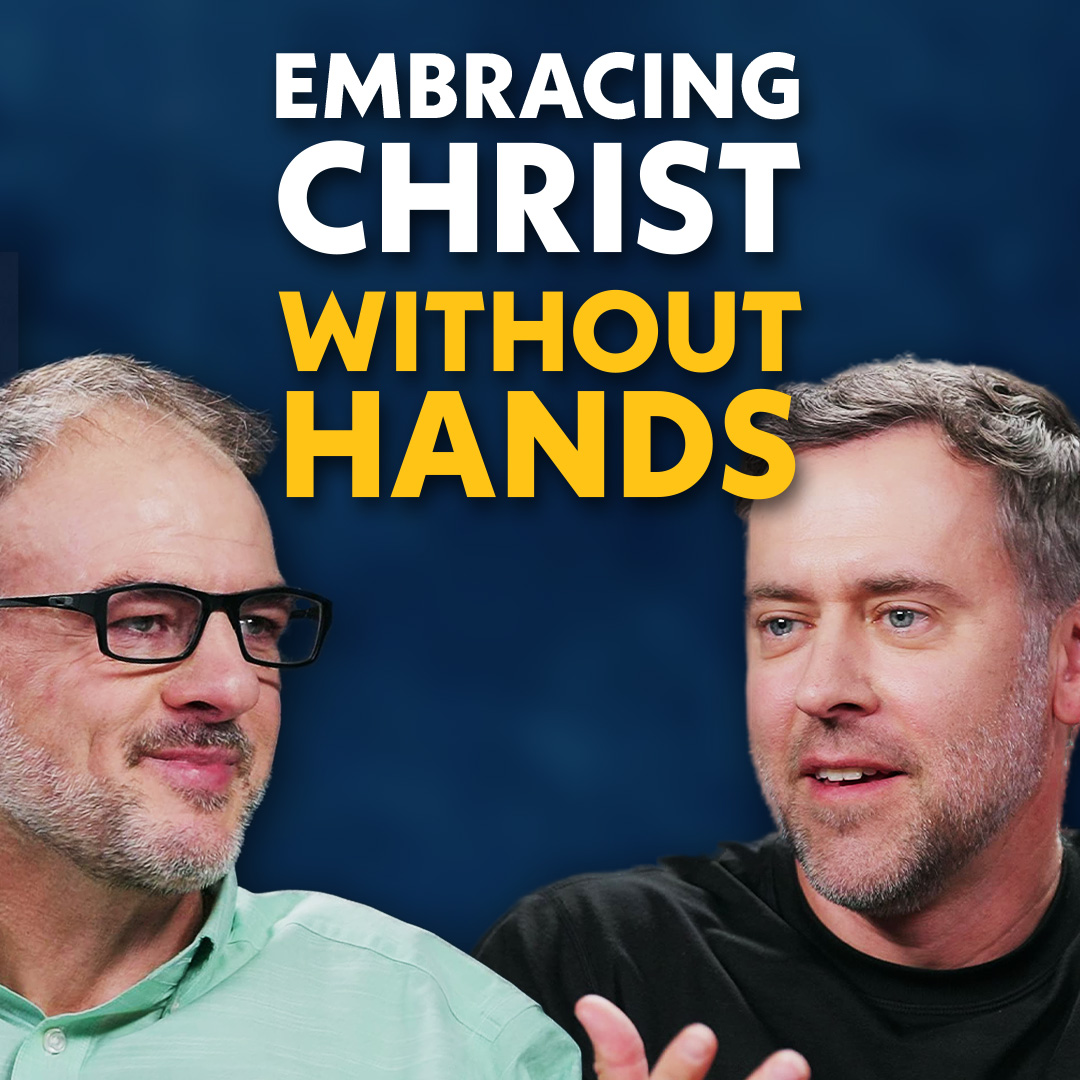
[00:00:00] Speaker A: Guys, God has a plan to turn your disabilities into your superpowers, whatever that is. Whether it's an obvious thing or whether it's an internal thing, whether it's something you were born with or something that you picked up through life that's become a wound that you struggle with, God wants to bless you precisely there and to use that to bless others. We're going to talk about exactly how to lean into that superpower that's hiding under your nose with John Fobbi on the Chris Stefanik Show.
Welcome to the Chris Stefanik Show. We're here every week to give you the tools and inspiration you need to live your everyday life with joy, even when life gets crazy. Missionaries of joy, thanks for making this work possible. If you're not one, become one. Click below this video and follow the link to help us make a difference and to change the world and to spread the inspiration and hope and joy and love of Jesus to everybody all around the world. This episode is sponsored in part by ewtn. You can catch this and so much more good, wholesome, beautiful, awesome stuff on EWTN streaming. And click below this video to sign up for the daily anchor. That's our daily inspiration in your inbox. No strings attached. Let's dive in.
John Fappe, it is so good to have you with me, man.
[00:01:25] Speaker B: Great to be with you.
[00:01:26] Speaker A: I've been looking forward to this for a long time, so thanks for coming, man.
[00:01:28] Speaker B: It's a pleasure.
[00:01:30] Speaker A: Okay, so full confession. When we brought you in for lunch, and I was like, hey, I didn't think through this. Do you need assistance? Do you need me to help feed you? Because you got a salad for lunch. Was this, you know, with the fork and, you know, there's some. There's some things missing to make that happen easily. And you're like, dude, I've been traveling internationally by myself for how long I could feed myself 30, 35 years. Yeah.
[00:01:56] Speaker B: Yeah.
[00:01:56] Speaker A: And then this is on you. You're like, dude, pull the table away. I want to show people. And thank you for doing this, by the way, because a lot of. One of the. One of the things that divides people is when we just don't understand basic things about people around us.
[00:02:08] Speaker B: Right.
[00:02:10] Speaker A: And so your disability has led to different abilities that are extraordinary. Watching you eat a salad was like, your feet have all the dexterity of my fingers.
And you're like, dude, pull the table away. I want to show people how I can open a can of Coke and pour it for myself. Just to show you I could do Stuff. So have at it.
[00:02:32] Speaker B: Sure.
[00:02:32] Speaker A: This is the first on the Chris Stefanik show. Sure, sure.
Like, it's so cool, man. And you got your watch on your ankle, obviously. Of course.
[00:02:39] Speaker B: Sure. You know, just to state the obvious, I was born without arms.
[00:02:42] Speaker A: Yeah. Yeah.
[00:02:44] Speaker B: Doctors don't know why. We don't really.
And I don't really care to know why.
All we can do is look ahead to today and tomorrow. And I've learned in life that there really are no unsolvable problems. There just are problems in life that haven't been solved yet.
[00:02:59] Speaker A: That's cool.
[00:03:06] Speaker B: Cheers.
[00:03:07] Speaker A: Cheers, brother.
Yeah, I'm looking at that, thinking, cool. You're looking at that thinking, dude, it's just something I do every single day.
[00:03:20] Speaker B: Yeah. You know, yesterday in the airport, somebody said, you're amazing. And it's not that. It's God is amazing. It's the grace of God.
[00:03:28] Speaker A: Say that thing you said again. There's no unsolvable problems, just problems that
[00:03:32] Speaker B: haven't been solved yet.
[00:03:34] Speaker A: Praise God. Thank you for that, though.
When did you first realize that you were different than most kids?
[00:03:41] Speaker B: When I went off to school for the first time. Kindergarten.
I mean, I was born into a very loving, supportive family. I had three older brothers.
And I didn't see myself as different until I went off to school and at recess time and see kids dart out onto the playground, jump on the monkey bar, swing set, play ball. And it was pretty apparent that something's different here.
[00:04:02] Speaker A: Was that something? That's just something you've come to embrace and see as a superpower and turn to a blessing to others, and we're gonna get into that whole story. But, you know, at that time in your life, did it beat you down? Did you feel inferior because you're different, or did you just think, no, I'm just different. I'm gonna do things a different way?
[00:04:21] Speaker B: It did. It did.
It was the fear of failure, going out there and trying and not measuring up, the fear of rejection. What if I went out there and I slowed my peers down and they didn't want me around? Fear of embarrassment, making a scene. Sure, it certainly did.
[00:04:38] Speaker A: You also describe, like, some of your early memories are traumatic from all this.
Share that.
[00:04:46] Speaker B: Yeah.
My first memory of life is being restrained and held back by a nurse at a Children's Hospital in St. Louis. I was 2 years old and getting fitted and tested for artificial arms and going through prosthetics, physical and occupational therapy. And in those days, parents didn't get to spend the night with their kids. And so mom and dad would come in every day into St. Louis, see me, and then at night they'd leave. And of course I wanted to go home. I didn't want to be around these people in white coats and their big words, and they're poking and prodding.
I can still clearly see them getting into the family station wagon, driving away, just being terrified, absolutely feeling absolutely abandoned. So things like that, you know, when you have a. When you're born with a disability, you know, you just go through different things a lot earlier than what most people have to deal with. And there was just the natural fitting in, you know, finding my place in the world, dating in high school, you know, all those kind of things that I always say, the, that, you know, a disability.
Well, first of all, I don't, you know, we can call it that.
[00:05:52] Speaker A: Yeah. What do you call it? What's the right way to say it?
[00:05:55] Speaker B: Well, in my corporate speeches and workshops that I do, I call it a condition.
So that can help people relate to whatever's going on in their life. But the reality, Chris, is the cross. That's what I call it. It's a cross.
And it's about embracing that.
[00:06:11] Speaker A: There's better ways to say. The Christian paradigm is the beautiful way to say it. I see all these things.
[00:06:17] Speaker B: It is. And it's about, you know, learning to embrace it.
[00:06:21] Speaker A: Hey, friend. I want to invite you into something that's changing lives. Every single day, people all over the world are rediscovering their faith, finding real joy, and learning how to share the gospel with confidence. And guess what? These lives are forever being transformed because of our Missionaries of Joy, our incredible monthly supporters, Everything we do, the Chris Stefanik show, life changing video series like Living Joy, Rise, Fearless and Renewed, our live events, it all exists because of them. And I want to invite you to become part of this movement. When you become a missionary, Joy, you're not just donating. You're stepping into a mission that equips, inspires and empowers you to live the gospel in your everyday life and to help others do the same. And that's not all. As a missionary, Joy, you get exclusive access to all our video series and empowerment to share them in small groups with friends. You get exclusive early access to new releases. You get Monday motivation texts direct from me. And you get access to our daily anchor, daily inspiration to fuel your faith. Here's the truth. The world is desperate for Joy. People are dying for Mimi. And together we could bring them the hope of Jesus. The question isn't if you can make A difference. It's. Will you click the link below? Join the mission today.
So you start experiencing this as a cross when. Well, from your first memories. But then as you experience, I'm not like a lot of other kids in the playground. Right? Right.
Was there a phase where that led to a teenage depression? A lot of kids, they feel different in the slightest ways. You're different in very overt ways. Right.
And they just crash and burn emotionally, and they become convinced no one else is like me. No one else understands me.
It can lead kids to want to die. Right.
Did you experience a time there, as you saw the disparity between other kids who were going out and playing football?
I can't do that. Other kids have an easy time finding a girlfriend. It's tough for me. Was there that time where you experienced, like, I'm not like the other kids, and therefore, I am less than, like, what lies did you have to struggle with and push back?
[00:08:41] Speaker B: So what I say is that the cross, the disability, it's not really different than what other people go through. It just makes it more intense, makes the struggles in life sometimes more intense. Everybody has these insecurities and struggles.
Sometimes the outward face of it's different. And for me, definitely, I mean, there was a time, you know, early on, early 10 years old, struggled with, you know, just accepting this and being very dependent and not really wanting to be pushed or challenged. My parents had to practice a lot of tough love on me.
Literally put me in a room in my bedroom and made me figure out how to get dressed.
But high school was tough. I mean, you know, just the whole. The whole fitting in and learning to another layer of learning to accept the cross, if you will.
And life gives us different, pivotal turning points, if you will. You know, you look back and there's, you know, three or four in your life that you can kind of put your finger on. That's what it was. And for me, what really helped me was a mission trip to Haiti. I was on a high school mission trip. I grew up in a small town in southern Illinois, and life is all about sports.
And when you're a kid without arms or a disability and you can't play sports, life's pretty tough. Thankfully, at the time, our diocese had a really strong youth ministry program in the diocese and in the parish. And I flourished in that environment and was given an opportunity to go to Haiti.
And I was 16 years old, and on our very first day, we went to Mother Teresa's Hospital for children in Port au Prince.
Now, this is not A conventional hospital. This is. I'm talking about, you know, a concrete bunker, you know, rusty, tuned, rusty tin roof, couple of windows.
And we arrived there in the morning. It was hot and humid.
And when I walked in, I was just immediately shocked. And all types of sights and scenes that were just snaring the emotions.
It was poorly ventilated. There was a lot of coughing and crying. Out of the corner of my eye, I saw one of the sisters administer an IV needle into the scalp of a baby's head because he didn't have enough muscle tissue on the limb to support it.
And walking up and down these baby row rows of these baby beds, seeing these little sick, malnourished hunks of life, and it reminded me, I had this flashback of what I just described to you about being at a children's hospital on my own and not being able to leave.
And all of that anger and all of that fear started coming back up again.
And I was just.
Just spiraling. And then all of a sudden, something grabbed my waist, and I looked down, and it was a little boy who was well enough to be getting some exercise.
And he had his arms locked around my waist. And he looked up at me with his big brown eyes, and I looked down at him, and I just felt like he wanted me to pick him up. And I couldn't do it. And I felt totally defeated.
Not because I couldn't pick him up, but it feel that I was failing him.
And I just kept thinking, kid, there's other people in this room you can go to. Why are you hanging on to me? And just like a bell clanking louder and louder, you don't have the arms to pick him up. You don't have the arms to pick him up. And I just felt so useless.
And on top of that, my own pain and, you know, this disability and trying to make sense of it in my life and, you know, I remember being on the plane going back into Miami, and as I was sitting there getting more and more restless on this plane after this whole experience of being in this little country and thinking, I don't get it, God, I thought you want us to help people, but you don't even give me the ability to help a little kid who's reaching out and wanting to be picked up and comforted.
And I lashed out at God. I said, you're a cruel God.
And I dared him to respond.
[00:13:11] Speaker A: There's an honest prayer.
[00:13:14] Speaker B: Well, you don't want to do that at 35,000ft.
[00:13:19] Speaker A: Sorry,
[00:13:23] Speaker B: you don't.
[00:13:23] Speaker A: You don't so here I'm thinking, what a beautiful, honest prayer. We should all pray. So honestly, you're like, wait, wait, hold on.
Make sure you're in a safe padded room.
[00:13:36] Speaker B: So it suddenly hit me.
The kid didn't want me to pick him up.
He was hugging me.
Aw, I missed it.
I had been consumed. My own pain, my own memories, you know, my own why me? And all that. And this kid did something in a single instant that I had struggled nearly 16 years of my life to do. It was look past my disability.
[00:14:02] Speaker A: Wow. He looked right past it.
You just saw this. You said that prayer, and you just saw that reality.
[00:14:08] Speaker B: It just.
[00:14:09] Speaker A: Yeah, it just realized what had happened.
[00:14:11] Speaker B: Yeah, yeah. And it was days, but, you know, and there and then I made the resolution that, you know, you gotta use this to help other people.
That we lift up ourselves in our pain, our.
Whatever it is we got going on in our life to deal with it, to help ourselves. You only do it by getting out of yourself and going out and helping other people. When we got back on the ground, it was wild.
Started receiving invitations to speak about our experience in Haiti. In my. Through all my whole senior year of high school, we talked, you know, the altar sodalities, the men's fidalities, the KC chapters.
And one talk always led to another talk.
Well, unbeknownst to me, once I stepped into the public eye, then schools started calling me. Self esteem was a big thing in the classrooms in the late 80s, early 90s.
[00:15:06] Speaker A: How old were you this time?
[00:15:08] Speaker B: I was 17.
And they would call and ask me to come and speak about self esteem and such. And then I got into College at St. Louis University, decided I like this communication thing. And corporations started calling me, asking me to come in and talk on motivation and attitude change and doing more with less.
And I was recruited by internationally known motivational speaker and author Zig Ziglar. I worked for him for three years, and he sent me all over the globe.
Had my own company doing corporate motivation for years.
And when my daughter was born, I decided it was time to kind of get off the road.
Had a great run for the last 14 years with the Society of St. Vincent de Paul, leading and running that organization in the Archdiocese of St. Louis.
And so now I'm here.
[00:16:02] Speaker A: Oh, man.
Glory to God.
You said something that really struck me. You said, I went through all the normal stuff that teenagers go through. Only having this condition made it all amplified.
[00:16:13] Speaker B: Sure.
[00:16:14] Speaker A: I think that's one of the things about your cross that stares us all in the face.
And frankly, it was the thing that stared you in the face when you went to Haiti. When you look at someone who has an experience of some sort of need or poverty, what you see is a mirror.
Like you're looking at yourself.
[00:16:31] Speaker B: Exactly. His material poverty connected with my emotional poverty. And in that moment, it was a beautiful moment of presence because we couldn't do anything for each other but just be there for each other.
[00:16:47] Speaker A: That's what you do for people, brother. I mean, for me to talk about self esteem, motivation, I have to find just the right words.
There's no shortcuts for me. Like, dude, you better say the right stuff or the teenage audience is gonna, like, lose their attention. Throw tomatoes immediately.
Yeah. There's a power God has added to you, to your messaging because of what you embody. You make us all look at. Everybody feels out of place.
[00:17:16] Speaker B: Sure.
[00:17:16] Speaker A: Every teenage, especially as a teenager, going around, you're talking in front of kids who are all feeling out of place, who are all feeling like they don't measure up, who all feel like I don't have the arms to embrace and lift. I can't do anything.
And here you are saying, yeah, you can. Yeah, you can. This is a long process, though, fighting back the wrong identities and words in your head. You know, what if you could identify it? Which lies had you lived out of before this experience? What were you calling yourself and what truths did you learn to relabel yourself with?
I don't know if you've ever thought of that in specific terms before, but
[00:17:54] Speaker B: it's the kind of thing that helps people. The great contemplative saints and writers in our church talk about the, you know, kind of the ego triggers, the need for safety, security, for love and affection and power and control.
And when those things are threatened in our lives, that's when, you know, we get all sideways and we go to sin and we get away from God and all that. So, you know, for me, you know, safety and security, you know, disability, just being very dependent and comfortable with that, you know, affection and esteem, you know, not feeling embarrassed all the time and, you know, finding love. And I have a Beautiful wife, married 22 years, Christine.
And I always say overmarried. And brother, we all do very blessed, you know, so.
And then, you know, power and control. We want to be able to fix things. We want to be able to do things. And there's so many things in my life, you know, even if it's something as simple, you know, around the house, like maybe, you know, the dishwasher's broke or Something that somebody might be able to get in and fix with their hand. You might be able to do that.
[00:19:14] Speaker A: Actually, I can't. You know, full confession with my two arms. I can fix nothing.
I can write books. But anyway, yeah. Oh, praise God.
But you've gone through this, obviously, like you're sitting before me, a man who doesn't have any of that in your head. Or does it creep up occasionally?
[00:19:33] Speaker B: Well, of course it creeps up.
[00:19:34] Speaker A: So how do you confront it then? How do you respond to it in your everyday, when you feel insecure, people are looking twice, or whatever it is that triggers you to feel the stuff you felt in high school.
And I'm asking this for myself and everybody watching because we all have these things that the old lies creep in all the time. So what do you do to build the mental resilience, to stay the firm, confident dude sitting here right now who speaks in front of corporate audiences, tells them how to live their lives, you
[00:20:03] Speaker B: know, so there's the practical things, you know, like making sure you hang out with positive people and being able to talk out your concerns and, you know, with loved ones. There's, you know, there's things like journaling, there's things like eating right and exercise. There's all that. But at the end of the day, what it is, it's prayer.
[00:20:24] Speaker A: Just staying rooted in prayer and praying
[00:20:25] Speaker B: a lot, offering every moment in prayer.
[00:20:30] Speaker A: Tell me what that looks like, what that means.
[00:20:33] Speaker B: Oh, you know, like, you know, like being at the airport and struggling to get something out of my bag and knowing that it's creating a scene. I mean, I can get it, I can do it. But, you know, sometimes you just don't want to be on stage. Sometimes you just want to get something and be on your way and not
[00:20:51] Speaker A: have five people look at you.
[00:20:52] Speaker B: Right. But I also have to remember that that is being a witness, you know, and letting God use that.
[00:21:01] Speaker A: How is it a witness in those moments, just by staying the joyful person, you are doing your thing.
[00:21:07] Speaker B: Strength, hopefully giving strength, courage.
That's a big thing these days. There's so many folks that just lack courage that have been, as you say, have been beat down and just don't even seem to be able to get out of themselves.
[00:21:25] Speaker A: So you see, just you doing it is sending a message.
Hey, guys, you can do it.
[00:21:31] Speaker B: Yeah, exactly.
[00:21:33] Speaker A: Be courageous. Yeah. Don't sit down and take a beating from your own brain.
[00:21:38] Speaker B: God gave us this life to live.
I spent too much of my early years on the sidelines, so it's important for Me to stay out and engaged in the world.
And that's why I do the missionary work that I do.
[00:21:53] Speaker A: Yeah. Praise God. John, what do you. I want to get into that work in a minute. But, you know, our pains, our weaknesses, the things that beat us down are the very things. And this is something I see echoed in conversation after conversation with people sitting in that chair.
These are the very things God uses to bless the world and to make us, I think in utilitarian terms, especially as a guy, use this to bless people. But God is first and foremost thinking, no, no, Chris, these are the things I use to make you beautiful. The things that. Those holes in your hands. Right, right. That hole in your side, in your life as you follow the way of the cross.
They're what makes you the resurrected version of yourself that I have in mind.
What do you love about John Fappe?
Not despite, but precisely because of these challenges, the superpowers, the things in your soul that make you beautiful, not just what you do.
[00:22:58] Speaker B: I guess I would again, this is a daily, A daily choice, but I guess it's my trust in divine providence. The older, the longer I live, the more I've learned to let go, the more I learned to let God do it, the more things flourish, things take care of themselves.
You call yourself a missionary of joy. I would probably say I'm a missionary of providence.
[00:23:24] Speaker A: How beautiful.
[00:23:27] Speaker B: Yeah, I think it's about just letting God work.
You know, you talk about letting God. God does use these things, and it does make us stronger.
That's all accurate in the Catholic tradition. We talk a lot about redemptive suffering, but, boy, that's a tough thing for someone who, when they're going through a lot of pain and they're living in the trenches right there with that to hear. Oh, you know, redemptive, it's not always that comforting to hear.
And I think, you know, when we get through it, we can see that it. I always say the struggle creates the muscle.
[00:24:07] Speaker A: Amen. And so just, like, reps.
[00:24:09] Speaker B: Right. So that redemptive suffering does that.
But I don't take a lot of solace in just redemptive suffering. I, I, as I walk this spiritual life with this cross, more and more, what I take, the solace, is that this isn't how I know that I connect with the crucified Christ.
[00:24:34] Speaker A: This is your connection with the crucified Christ.
[00:24:41] Speaker B: And so.
And so that's a love affair.
[00:24:49] Speaker A: So that moment in the airport where there's, like, people looking on and you're feeling his closeness and you sense that near you?
[00:24:57] Speaker B: Yeah, I mean, I feel his closeness, but also, you know, also, it's a way of offering it to him.
It's also a way of, you know, charity.
Charity in the work that we do for others.
Ultimately, we do it for the love of.
Because that's Christ. That's Christ that we see in the suffering. And to love that suffering person is loving Christ. And Mother Teresa was the master at articulating that the most.
And so for me, yes, suffering is redemptive, but suffering is also worship.
And allowing me to be so connected to Jesus,
[00:25:47] Speaker A: it's made you an extraordinary soul. It brought you close to Jesus, but it gave you a mission. This has given you a mission that other people don't have.
So tell me about the mission. What are you doing now?
Are you still doing corporate speaking, by the way, or speaking at parishes? Because I'd like to link below this video to that if people just want to book you to give a talk. Like, how do people do that?
[00:26:05] Speaker B: Sure, Yeah, I do that if I'm asked.
[00:26:07] Speaker A: All right, so we'll link. Absolutely. You give us a link below. Okay. What's the website? Friendsforgotten.org, friendsforgotten.org yeah.
[00:26:13] Speaker B: So they can reach me through that.
[00:26:15] Speaker A: Friendsforgotten.org you have a bigger way that you've turned all the pain, all the struggle into a blessing. So what are you doing? Because it's really. I'm so excited to give you the floor to talk about this because it's so beautiful, it's so inspiring. And not just because it's like, hey, this is a cool thing this guy's doing.
Because as you listen, I want you to hear this.
God is wanting to use your pains, whether it's starting an organization or just blessing the person in front of you who needs a little encouraging watching you carry your cross. Well, he wants to turn it into a source of blessing for other people.
It becomes your superpower, man. This is your cape. So, yeah, tell us about. About what you're doing.
[00:26:54] Speaker B: I'm really glad you said that and brought that up, because for all the young people out there listening, they live in a world that preaches to them all the time. You want to be happy, follow your passion.
And, man, there's something that rings hollow about that. To me, it seems self indulgent.
I tell people, maybe God's not asking you to follow your passion. Maybe he's asking you to take up his mission.
And that's what I think has happened to me with the founding Of Friends of the forgotten. My whole Friends of the forgotten, yes, Friends of the forgotten. What we do is we help connect adults with disabilities seeking purpose with institutionalized disabled kids in the developing world yearning for love.
So all the corporate motivation and all the things that I've done for years, I'm taking it now to the third world and offering all of that organizational effectiveness and motivational stuff to schools, hospitals, orphanages, the religious congregations that run them that would never think about having that kind of training brought in or ever had that kind of budget.
[00:28:06] Speaker A: That's awesome.
[00:28:07] Speaker B: But I won't do that myself. I also take other disabled people with me to do mentoring, to offer example, empathy, encouragement. It's all rooted in a theology of presence. I mean, we're not going to dig wells in Africa, we're not going to take tote cases of Bibles. We just can't do that. But what we can offer is ourselves.
And so just as that kid reached out to me in Haiti years ago, it stayed with me my whole life. And I think my whole life has led up to this point. Whether it's the memories of childhood, my leadership experience running a nonprofit, my work in corporate motivation, and then my exposure to the mission field, I have a pretty good friendship with many of the religious congregations that run these facilities.
[00:28:53] Speaker A: Okay, so how do people jump on board and help Friends of the forgotten?
[00:28:57] Speaker B: People can jump on board and help friends of the Forgotten by going to friendsofforgotten.org or you can check out our socials on Facebook or Instagram.
[00:29:05] Speaker A: Okay, we'll link to all of it.
[00:29:06] Speaker B: Yeah, the website is probably the best and most information there.
[00:29:10] Speaker A: Awesome. And you're obviously needing funds because you're a non profit. Sure. Can people hop on board and go on trips with you or people maybe who have a disability who want to make a difference with you? Are you open to, to take any queries for people who want to join you physically?
[00:29:23] Speaker B: We are open to, you know, this is going, this is, this is a special calling. So yes, we need people with disabilities who are on the spiritual journey. They don't have to, you know, to be perfect or be whole, but just be willing to give of themselves in terms of there's so many suffering children out there that just needs to know someone cares about.
So yeah, we need help with everything from travel costs to, you know, building the network, recruiting and vetting the missionaries to building the network with the religious based congregations that are operating these facilities. There's still some 5 to 6 million children institutionalized around the world in about 9,000 different facilities.
[00:30:11] Speaker A: These are kids who have disabilities, who
[00:30:13] Speaker B: are disabilities and other disadvantages that are still institutionalized, which is way more than
[00:30:20] Speaker A: they have helpers to just make them feel loved, not just fed, but pay attention to them.
[00:30:25] Speaker B: And one thing I would like to address is I often get the question, well, why wouldn't you do that here? Why wouldn't you help here? Well, first of all, these kids have no one. Secondly, we don't have the institutions in the United States that still exist in the developing world.
And thirdly, Chris, honestly is I can't offer a message of hope and healing without talking about the cross of Jesus Christ. And sadly, too much in the United States, that message is barred.
[00:30:57] Speaker A: Well, there's a whole world that's hungry where Jesus isn't welcome and not shut out, right? Because they know. They know. Dude, you can't.
When you go to Haiti, like, no one's pretending that they can carry that cross of life without faith, right? You take that from us. What do we got?
[00:31:13] Speaker B: Exactly? Exactly.
[00:31:15] Speaker A: John, when you say theology of presence, when you look at the things you can't do, and it forces you to focus on the main thing you can do, which is be a presence, right? An encouragement, a source of courage, source of love.
There's so many people watching who just don't feel like they matter.
And I want to tell you, man, you matter so much just by being you, just by being present, by bringing God's presence in the world through you, by your love, by your attentiveness to somebody, by the joy you can muster in a hard day.
Tell us why that theology presence matters. Like, how are you blessing people just by going and being there?
And some of it might be obvious to you because you've been living it so long, but it's just not obvious to a lot of people anymore. They feel like, if I can't do X, gosh, I'm a Christian. I want to be a witness. I don't even have podcasts.
Dude, you're missing the point of what actual Christian witness is. Why does it matter? Tell us more about the theology presence.
[00:32:09] Speaker B: So I learned a long time ago that if my life was going to be about doing, I would never measure up. I would never feel satisfied. I'd never be able to do the things it's about being.
We are human beings. We're not human doings. Being means to occupy a place and a position in life. Who are you to yourself? Who are you to the world?
And I always think about, I had a neighbor years ago Mike, who was a quadriplegic, injured in a swimming accident. And for the most part, Mike couldn't do anything.
But he would, on a sunny day, get in his electronic wheelchair and go down to the park, hang out with the, you know, watch a ball game or something.
His presence did so much for people. His witness, if you will.
So, so often we. We get caught up in that. We got to do things. We got to start a program. We have to have a project and. And again, we need acts of charity. Of course we do. But I've seen all too often that those acts become driven by ego.
And, you know, whether it's to fix somebody else and then it becomes patronizing or it's, you know, to kind of pat ourselves on the back because look at the good we do.
And what by presence, what I really mean is, is the ability just to sit and to suffer with someone else. Sit in your suffering to listen. Maybe you don't have an answer, and that's okay. But just so often I've learned with. Working with people in need, they just want.
They just need to know somebody cares.
My old mentor, my own boss, Zig Ziglar, used to say, people don't care how much you know until they know how much you care. And that is so true.
And so presence is just about again, seeing Christ in that other person and being Christ, seeing the face of Christ, being the face of Christ. St. Augustine says that God is closer to me than I am to myself.
And just being in those moments.
And, you know, there's such beautiful, beautiful scenes of that in the Bible. One of my. One of my favorites is the gospel where the woman of Bethany is weeping at Jesus feet and, you know, putting the oil on his feet. And the apostles are all getting all frustrated because this is expensive and this isn't efficient. And this is that and just that beautiful.
All she had in her po. I mean, that's all she had and it's all she gave, but to.
And to humble her. So, I mean, to do it at the feet, you know, for us, that's. Feet are kind of. Kind of weird and that sort of thing, but just to worship. To worship.
[00:35:12] Speaker A: Wow.
So you're going to give an inspirational message teaching corporate health, but also just being presence.
This is. I'm looking at your face as you share this stuff. This comes from such a profound interior union with Jesus, which.
There's just no shortcut around that, bro.
[00:35:31] Speaker B: I mean, we're all sinners.
[00:35:34] Speaker A: No, we are. No, but like, clinging to that.
If someone wants to make it through hard times or make an impact in the world.
Which is why I love that you're, you know, you're not trying to just make a million dollars doing this in a purely secular way, because there is no purely secular way to bear the cross. Well, exactly how did you fall in love with Jesus?
[00:36:05] Speaker B: Through other people. You know, through other people, through that little boy in Haiti, you know, through the, the tenderness of my wife, through the strength of my mother, through, through my, you know, my, my best friend, my best friend Neil, who, when I was wanting to figure out how to, you know, on the sidelines of us back in school, in grade school, on the sidelines, and he said, hey, you can come out and play baseball. And I'm like, what do you mean? He says, I'll bat for you and you run the bases. You know, just so the body of Christ is everywhere, you know, it really is so in so many ways the body of Christ, people are out there hurting, they're depressed, they're anxious, they're suicidal. You know, people are physically ailments. Everything but the, but the body of Christ, when it is suffering, the body of Christ also heals.
It comes together through other people.
I really believe that the real miracles in life are our ability to spot the miracles.
So what I mean is the Spirit works through the simple, the subtle, the ordinary. And too often we just discount that.
But the miracle is our ability to see the Spirit working in the simple, the subtle and the ordinary.
[00:37:34] Speaker A: So when people really, really feel beaten down though, and they feel like, but I just, I don't care what you guys are saying, these encouraging words are just falling flat for me.
I got nothing.
What do you got? In those moments where you need to dig the deepest, what do you do? What's the one thing you can do?
[00:37:50] Speaker B: So when you have nothing, that's a most beautiful moment to spend time in. Just quiet prayer, doing nothing again, being with the Lord.
You know, if you can go to a chapel in front of the Blessed Sacrament, that's fine. But even just taking 5, 10, 20 minutes in your room by yourself and having that time with God and people will say to themselves, oh, but my mind wanders. And this and that, you catch yourself doing it and just bring it back. It's never about the amount of attention that you're giving. It's about your intention, your intention to spend that time with God. And silent.
It's one of the beauties of the Catholic Church. We have a 2000 year old history of silent and contemplative worship and people should research it.
No other church has it. And research it and live it. Because that is.
That's the key that unlocks so many doors.
[00:38:56] Speaker A: And when you're doing that, are you just one? It's like, okay, Lord, I got nothing. I got no words to say. Are you picturing him there?
And then just say, just sitting quietly, what are you doing?
[00:39:08] Speaker B: Sure. You could take a sacred word or an image. You know, it might be Jesus. It might be, you know, might be love or whatever, but just have a word or an image so that whenever you feel your mind drifting, you can kind of pull yourself back with that image. But the idea is just to let all of those thoughts and distractions just kind of float. Like, you know, leaves that fall on. On a stream. And just let them float and don't get attached to them. Let them, let them. You notice it and you let it go. You notice it and you let it go. And what that is doing is that's building your muscle to let go of a lot of stuff in life.
[00:39:44] Speaker A: Oh, that's cool.
That's really cool. Yeah, I love praying the Jesus prayer. I accept Jesus prayer.
[00:39:50] Speaker B: Yes, absolutely.
[00:39:51] Speaker A: Just breathe in, Lord Jesus. Breathe out. Have mercy on me.
[00:39:54] Speaker B: But I mean, I'm telling you, there's just great. There's great writers out there. I mean, you know, one of my favorites is Father Thomas Keating.
[00:40:01] Speaker A: Yeah.
[00:40:03] Speaker B: Trappist monk. You know, he was the developed centering prayer, but so many others in rich tradition. St. John of the Cross.
I just love his words. I mean, he says it very clearly. You either believe this or you don't. And it all flows from belief. It's the reason why we call it faith.
[00:40:22] Speaker A: That's awesome. One of my favorite ways to do that. I have this.
My San Damiena cross is a big one. I have a smaller one. I'll have my morning coffee. Just stare at him. Right. Sometimes I got nothing to say. It's like, great.
Here we are. You're here for me, I'm here for you.
[00:40:38] Speaker B: Again, it's about intention, not attention.
Yeah.
[00:40:43] Speaker A: John, if I could snap my fingers for you and suddenly give you arms. When you think about how this is blessed you, made you close to Jesus, blessed other people, would you take the arms or would you prefer this?
[00:40:59] Speaker B: Oh, of course not. I would not take them. No, no, because this is my cross.
This is my path to salvation.
[00:41:10] Speaker A: So this is what is needed to be a blessing. Bring it. Huh?
[00:41:16] Speaker B: Well, to be a blessing, but also to know my Lord and Savior.
See, the spiritual journey is always about evacuating. The self.
It's the self that gets into the way of all of this stuff. It's our desire again, to be right or to be in control or to be loved or to be recognized. And all that in union with God, union with Christ is. He doesn't want any of that. He doesn't want any of those things. What he wants is a relationship with us, is us to be back in union with him.
[00:41:52] Speaker A: Mm.
It's amazing, man. It really is. I was just. It's. It's. It's crazy. The Lord speaks to me through this conversation so powerfully, and just not knowing this would go there. Last night, I was thinking about.
This is my 50th year, so it kind of causes you to pause and look at life, right? And I'm just thinking of all the many blessings, and I just.
I was praying, like, lord, of all the blessings, thank you for the pains.
I mean, these are the greatest sources of unity with you.
The pains within my marriage that, you know, two broken human beings, like, we all are coming together. There's ways not seeing eye to eye where it's like your beloved can just be a dagger without intending to be, and you're the same back.
But then that's actually where we find the greatest love, that we still embrace each other in that. Like, thank you. Thank you, Lord, for the pains.
It's not an accident. It's a feature in life.
[00:42:54] Speaker B: Exactly.
[00:42:56] Speaker A: Wow, man. Thank you for embodying that, because I can. Again, I can say that you literally embody that as a Christian, walking your walk the way you do.
So thanks for the message, brother. I'm so proud of you. I'm so grateful.
[00:43:09] Speaker B: Thank you.
[00:43:10] Speaker A: Yeah.
[00:43:12] Speaker B: Just a pilgrim on the journey, too.
[00:43:14] Speaker A: Yeah. Praise God.
Would you say a prayer right now for anybody watching who feels disqualified because they're looking at their own disabilities in their heart, their emotional life and their brain and their body and feeling like, I don't matter. I can't be a blessing.
What do I have to give the world? They feel awkward, they're not fitting in, and God is like, no, no, no. Right. Not despite that, but right there in that I want you to be with me and to be a sign of my love for the world. Would you just lead us in prayer for that person? Actually, we're all that person. You know, Sometimes we notice it, sometimes we don't.
So let's pray.
[00:43:53] Speaker B: So Lord Jesus, in our pain and our struggle, in our desire to understand and make sense of it all, our need for.
For energy in the midst of the exhaustion.
Help us to.
Help us to. Just to come to you. You say that you know, you arrest for all who are labor and burden.
And to come to you that you will take care of everything.
And to surrender our desires for control, our desires for affection, our desires for safety or security.
And to know that you will take all of that and mold it into something that you want for your glory. To help people understand that life is worth living, that there's tremendous joy and tremendous opportunity and tremendous grace.
Just help all out there who might be despondent, searching, lonely, scared.
Help them to know that you are there with them.
Amen.
[00:45:13] Speaker A: Amen. Thank you, Jesus.
I love you, brother. Thank you so much, man. I'm so grateful for you. Thank you. That hug is. On behalf of everybody watching, I wanted to give you a hug. I love you guys. You matter. You're incredible. Be a blessing just by being you to the people around you. God bless you. We'll see you next time.